First Backpacking Trip Planning: Beginner Guide
Imagine zipping up your tent at dusk.
The last light fades behind the ridge.
You’re miles from the car.
No streetlights.
No traffic hum.
Just the soft rustle of leaves and the slow crackle of a small fire.
Your first backpacking trip isn’t about conquering mountains.
It’s about that quiet moment when you realize you carried everything you need on your back — and you’re okay.
That simple, powerful feeling is what this guide helps you reach safely and enjoyably in 2026.
This is the complete beginner system for planning and executing your very first overnight backpacking trip.
You’ll get a realistic timeline, exact gear additions beyond day-hiking, how to choose your first route, food and water planning, packing strategies, campsite selection, safety routines, and the mental prep that turns nervous excitement into calm confidence.
By the end, you’ll have a step-by-step checklist to go from zero nights out to one successful trip in 4–8 weeks.
Why Your First Backpacking Trip Is a Game-Changer
Day hikes are great — but sleeping under the stars changes everything.
You disconnect deeper. move slower, take in more.
You notice sounds, smells, light you never catch on quick walks.
Most beginners say their first overnight feels like crossing a threshold: from visitor to participant in the wild.
In 2026, lightweight gear is affordable, apps make route-finding easy, and beginner-friendly trails are well-documented.
One good trip often turns into a lifelong habit.
Gear Additions: What You Need Beyond Day-Hiking
You already have shoes, pack, water bottle, layers, first aid from the previous article.
Add these for overnight:
1. Shelter

Tent (1–2 person, lightweight) or tarp + bivy for ultralight.
Freestanding 2-person tents are easiest for beginners, i find 1 person tents to be very small
A good lightweight option for backpacking is the GEERTOP 2 Person 4 Season Backpacking Tent Waterproof
2. Sleep System

Sleeping bag (20–30°F rating for most areas) I personally always have a below zero sleeping bag for cold British Columbia nights.
For the cold nights you will spend tenting, the Qezer Down Sleeping Bag for Adults is a solid option to keep your teeth from chattering all night.
3. Cooking Food

Small stove (canister or alcohol). this is optional as it adds weight but handy to stop quick and eat without starting a campfire
This Backpacking Stove Portable Camping Stove is a small lightweight stove with a handy carrying case that won’t take up much space in your pack.
4. Extra Clothing & Warmth
This step is one of the most important. Carry Extra layers in your bag, warm hat, gloves, camp shoes (light sandals or down booties).
Bring extra socks — wet feet kill trips very fast.
5. Lighting & Power

A good hands-free flashlight like this Rechargeable Headlamp 990000 High Lumens gives you all the light you need and more when a campfire isn’t close enough to light your way.
Small power bank for phone to keep your maps available could be the difference between making it out of the woods safe.
6. Hygiene & Waste
Probably one of the worst parts of being in the woods is answering when nature calls.
For your first backpacking trip for beginners, it is a good practice to keep a trowel to dig a small hole to do your business, then bury after.
The scent of your waste can attract animals so be careful, always use a biodegradable toilet paper and be extra cautious of using wide leaf plants unless you know what they are.
7. Navigation & Safety

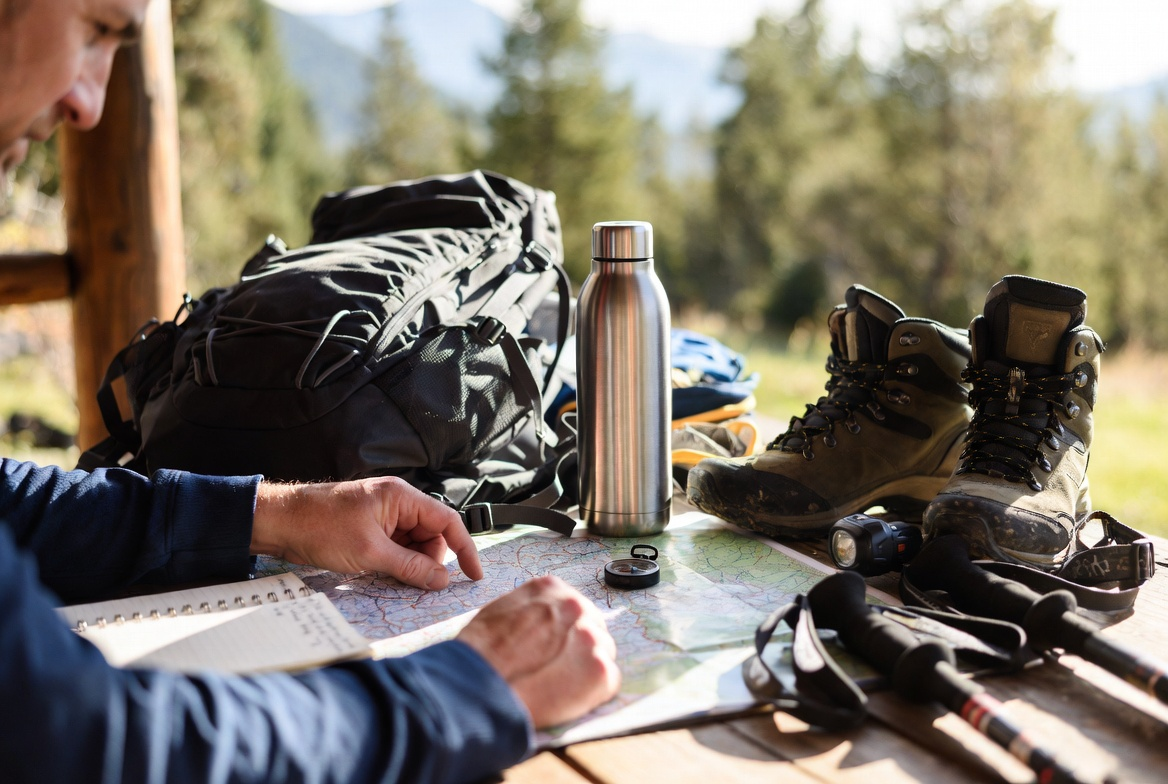
Offline maps or even the old school paper maps and good compass are good to have.
Phones are prone to weather and battery drain. The Proster Compass can’t run out of juice and might just save your life
Satellite communicator for remote areas — the Garmin inReach Mini 2 is a device I wouldn’t spend more than a night in the woods without, especially when alone.
8. Pack Upgrade (if needed)

You will have a lot of gear to be comfortable for a few nights, a large bag will make your experience so much better. The Mardingtop 70L Military Internal Frame Backpack will give you ample space to pack your needs for the trail.
The Osprey Hikelite 26L works for 1-night trips if you pack light; but upgrade to 60–80L for comfort on 2+ nights.
Choosing Your First Route (Beginner-Friendly Criteria)
Look for:
- 4–10 miles total (out-and-back or loop)
- 500–1,500 ft elevation gain
- Established trail with campsites 3–6 miles in
- Water source near camp (filter required)
- Permit if needed (check Recreation.gov or ranger station)
Use AllTrails filters: “easy” or “moderate,” “overnight,” “waterfall/lake/viewpoint” payoff.
Read recent reviews for bugs, mud, downed trees.
Food & Water Planning for 1–2 Nights
Water

Water is the most important thing you will need on any journey, water is heavy and doesn’t last very long. It is very helpful to be able to draw water from local creeks without the risk of getting sick from dirty water.
Membrane Solutions Gravity Water Filter Pro 6L offers a membrane to hold up to 6L of water and a filter for safe consumption.
Food
- Breakfast: oatmeal packets, coffee.
- Lunch: tortillas, peanut butter, cheese, jerky.
- Dinner: dehydrated meals or simple boil-in-bag.
- Snacks: nuts, bars, dried fruit.
- Aim for 2,000–2,500 calories/day — more if cold or high effort.
- Pack everything in bear-proof container or hang properly.
First Backpacking Trip Packing & Weight Strategy
Rule: Keep base weight (everything except food/water) under 15 lbs.
Pack light:
- Wear heaviest items (boots, layers) while hiking.
- Use stuff sacks for organization.
- Test-pack at home — walk around neighborhood with full load.
First trip: aim for 25–35 lb total pack weight.
Campsite Selection & Setup
- Look for: flat ground, near water (but 200 ft away), established site if possible.
- Set up tent on a flat durable surface, (avoid plants, and low spots).
- Guy lines to stop your tent from blowing away in the wind.
- Cook 200 ft from tent — store food in bear bag or canister.
Safety & Leave No Trace Basics
- Tell someone your route, start/end time, car location.
- Carry map/compass even with phone.
- Know basic first aid — blisters, cuts, sprains.
- Pack out everything — including toilet paper.
- Follow Leave No Trace: camp on durable surfaces, bury human waste 6–8” deep.
Common First-Trip Mistakes to Avoid
- Overpacking — you’ll carry every pound twice.
- Cotton clothes — they stay wet and cold.
- No blister prevention — moleskin or good socks save feet.
- Poor campsite choice — too close to water or trail.
- Forgetting headlamp — dark comes fast.
Making Backpacking a Habit
- Plan one trip per month at first.
- Keep a simple journal: what worked, what to change.
- Upgrade one item per trip based on real experience.
- Share photos and stories — it keeps motivation high.
Connect This to the Rest of Your Adventure Journey
Your first backpacking trip builds the skills and confidence for bigger adventures.
For tips and tricks for scouting off-grid land — see Best Land for Off Grid Living: What to Look For.
Navigation and endurance help with Navigation Without GPS: Basic Navigation Skills.
And the self-reliance mindset ties directly to Off Grid Daily Life: Mindset & Routine Tips.
FAQ
How heavy should my first backpacking pack be?
25–35 lbs total (including food/water) is comfortable for beginners — lighter is always better.
Do I need a tent or can I use a tarp?
A freestanding tent is easiest for beginners; tarps work if you practice setup first.
What food is easiest for a first trip?
Dehydrated meals, tortillas with peanut butter, instant oatmeal, jerky — simple, no-cook or boil-only.
How far should my first backpacking trip be?
3–6 miles to camp is perfect — far enough to feel remote, close enough to bail if needed.
Can I bring my dog on my first backpacking trip?
Yes — if they’re trail-trained, carry their food/water, and check leash rules for the area.
Start planning your first backpacking trip today with one small action — maybe pick a trail or order a sleeping pad.
The moment you spend your first night out, something shifts.
You realize you can carry your world on your back — and you’re stronger than you thought.
You’ve got this.
Your first overnight is waiting.
Ready for the next step? Head over to Best Outdoor Adventure Gear: Beginner Essentials and keep building your outdoor confidence.