Best Outdoor Adventure Gear: Beginner Essentials
Imagine stepping onto a quiet BC trail for the first time, boots gripping the earth, pack sitting just right on your shoulders, and knowing you’re actually prepared instead of just hoping for the best.
No blisters after two hours. No soaked clothes when the rain rolls in. No panic when the sun drops behind the cedars.
Just you, the woods, and the quiet satisfaction of knowing your gear is doing its job so you can enjoy the day.
That feeling is what this guide is all about.
Whether you’re planning your first day hike, a weekend backpacking trip, or just want to explore the backroads without suffering, the right beginner outdoor adventure gear makes all the difference.
In 2026 the options are better and more affordable than ever — lighter fabrics, smarter designs, and solid performance without needing a second mortgage.
This complete guide walks you through exactly what you need, why it matters, and how to choose gear that will last for years of real adventures here in British Columbia and beyond.
No hype. No sponsored fluff. Just practical, field-tested recommendations that turn nervous beginners into confident trail users.
Why the Right Outdoor Adventure Gear Matters for Beginners in 2026
Good gear isn’t about looking pro — it’s about staying comfortable, safe, and dry so you actually keep going back.
Bad gear quits on you at the worst moment and makes you swear off the outdoors forever.
The good news? You don’t need everything at once. Start with the essentials for day hikes (feet, back, weather protection) and add pieces as your trips get longer.
Focus on fit, quality, and versatility rather than brand names, and you’ll build a system that grows with you.
Footwear: The Foundation of Every Adventure
Your feet carry you the entire way, so they deserve the biggest investment on this list.
For most beginners, a mid-height hiking boot or supportive trail runner with ankle stability is perfect.
Look for waterproof/breathable lining, aggressive tread for mud and roots, and enough cushioning for rocky sections.
Avoid heavy leather boots unless you’re heading into serious alpine terrain right away.
Popular beginner choices that actually hold up on BC trails:
- Merrell Moab 3 Mid Waterproof
- Salomon X Ultra 4 GTX
- Keen Targhee III
Buy one size bigger than your street shoes and wear them around the house for a week before hitting the trail. Your toes will thank you.
Your Daypack: The Mobile Basecamp
A 25–35 litre pack is the sweet spot for day hikes and easy overnighters. Skip the huge 70-litre expedition bags until you’re ready for multi-day trips.
Key features to look for:
- Padded shoulder straps and hip belt
- Hydration bladder sleeve
- Built-in rain cover
- External lash points for poles or a jacket
Solid beginner options:
- Osprey Talon 22 or Stratos 24
- REI Co-op Trail 25
- Deuter Speed Lite 30
A good pack disappears on your back and lets you carry water, layers, snacks, and safety gear without rubbing or bouncing.
Weather Protection: Staying Dry and Comfortable
In British Columbia, rain can arrive in minutes. A proper hardshell jacket and lightweight rain pants are non-negotiable.
Look for:
- 10,000+ mm waterproof rating
- Pit zips for ventilation
- Adjustable hood
- Packable design
A reliable combo that won’t break the bank: REI Co-op Rainier Jacket & Pants. Together they weigh less than a pound and have kept me dry through sideways coastal squalls.
Lighting and Navigation Essentials
The woods get dark fast under big trees. A headlamp with 200+ lumens, red-light mode, and USB-rechargeable batteries is essential. Pair it with a physical topographic map and baseplate compass — phones die and signals disappear.
Add a small first-aid kit with blister care, bandages, tweezers, pain relievers, and an emergency whistle. Keep it simple and personalized so it actually fits in your hip belt.
Hydration System and Layering Basics
Dehydration sneaks up fast on climbs. A 2–3 litre hydration bladder plus a hard bottle for easy refills works great. Add a Sawyer Squeeze filter for longer trips.
Layering is the real secret to comfort:
- Merino wool base layer (top and bottom)
- Fleece mid-layer
- Rain shell on top
Always pack an extra warm hat and gloves, even in summer. If you’re warm at the trailhead, you’re already overdressed.
Trekking Poles and Multi-Tool Kit
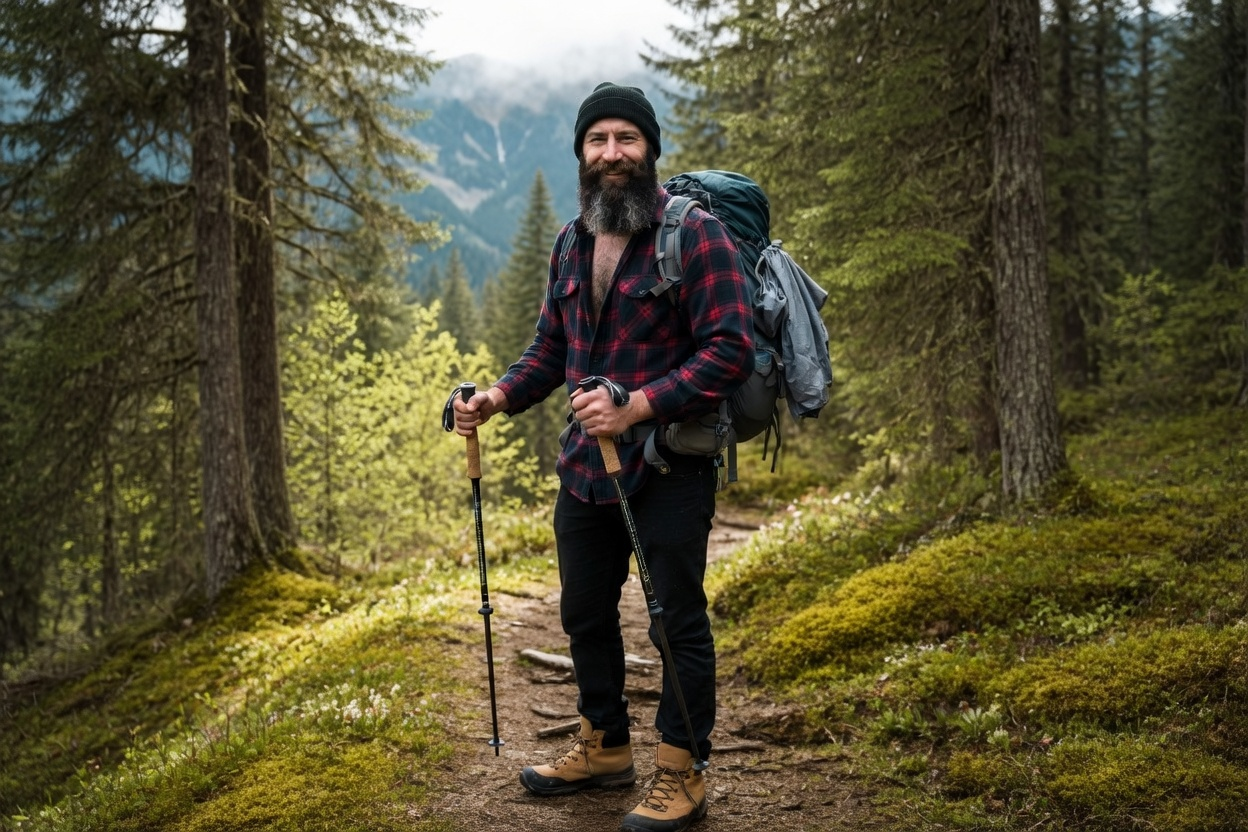
Most beginners think poles are for older hikers. Wrong. Collapsible trekking poles save your knees on descents and give balance on roots and rocks. Black Diamond Trail Ergo Cork poles are lightweight and pack away easily.
Round out your kit with a solid multi-tool (Leatherman Wave or Gerber), 10 feet of duct tape wrapped around a pencil, 50 feet of paracord, a lighter, and a fire starter. This tiny kit fixes 90% of trail problems.
Common Mistakes Beginners Make with Gear
- Buying everything at once instead of starting small
- Choosing style over fit (try everything on in-store)
- Skipping rain gear because “it looks like a nice day”
- Carrying too much weight instead of learning to pack light
- Ignoring second-hand options — Facebook Marketplace and MEC outlet have saved me hundreds
Making Your Gear Work for the Long Term
Take care of it and it will take care of you. Clean boots and packs after every trip, store them dry, and repair small issues before they get big.
Shop used when you can, rent first from local outfitters to test gear, and focus on the “Big Three” for overnight trips: pack, shelter, and sleep system.
Connect This to the Rest of Your Outdoor Journey
The best gear is the gear you actually use. Once you’re comfortable on day hikes, the next natural step is learning basic survival skills or trying your first overnight. Everything builds on everything else.
Frequently Asked Questions
How much should a beginner spend on outdoor adventure gear?
$400–$700 gets you a solid starter kit that will last years. Focus on boots and pack first — they make the biggest difference.
Is expensive gear really worth it?
Sometimes. A $150 pair of boots that last five seasons is cheaper than replacing $60 pairs every year. Buy quality where it matters (feet and back) and save on accessories.
What if I’m on a tight budget?
Start with used gear and add one quality piece per season. Rent until you know what you like.
Do I need all this for a simple day hike?
No. Start with boots, daypack, rain jacket, water, and a small first-aid kit. Add the rest as your adventures grow.
Start building your outdoor adventure gear kit today with just one or two quality pieces. The first time you finish a trail feeling good instead of beat up, you’ll feel that deep satisfaction of knowing you’re doing it right.
It’s not about having every gadget — it’s about taking that first step onto the trail with confidence. You’ve got this. The woods are waiting.
Your friend in the woods,
Backwoods Bob
Grid Free Life