Rainwater Harvesting for Off Grid Living
Imagine turning on your kitchen faucet and watching clean, fresh water pour out — water that fell from the sky onto your own roof just days ago.
No utility bill.
No well-drilling costs.
Just free, abundant rainwater you collected and stored yourself.
That quiet, powerful feeling of water independence is what rainwater harvesting delivers every single day off-grid.
And in 2026, the systems are simpler, cheaper, and more reliable than ever before.
This guide gives you the complete beginner-friendly system for rainwater harvesting off grid.
You’ll learn how to calculate your needs, choose the right barrels and filters, design gutters and first-flush diverters, treat and store water safely, maintain your system year-round, and scale up as your family or homestead grows.
By the end, you’ll have a clear plan to capture, store, and use rainwater reliably — even in dry climates or during long winters.
Why Rainwater Harvesting Is a Game-Changer Off Grid
Water is life off-grid.
A reliable well can cost $10,000–$30,000 to drill, and many rural parcels don’t have usable groundwater.
Rainwater harvesting turns your roof into a massive collection surface that delivers free water every time it rains.
In areas with 30+ inches of annual rainfall, a typical 1,000 sq ft roof can collect 20,000–30,000 gallons per year — enough for a family of four to live comfortably.
Even in drier regions, a well-designed system with large storage can cover most needs.
Harvesting rainwater also reduces strain on local aquifers, eliminates pumping energy costs, and gives you soft, chemical-free water perfect for drinking (with proper treatment), gardening, laundry, and showers.
Once set up, your system runs almost free for decades while making you truly independent from municipal water or expensive wells.
Step 1: Calculate Your Real Water Needs
Start by knowing exactly how much water your household uses daily.
Typical off-grid usage per person:
- Drinking & cooking: 1–2 gallons
- Personal hygiene (showers, washing): 5–10 gallons
- Laundry: 5–10 gallons per load
- Garden/livestock: varies widely
A family of four usually needs 40–80 gallons per day for basic living.
Multiply by 30 for monthly needs, then add a 20–50% buffer for dry spells.
Your roof size × rainfall × 0.623 (gallons per sq ft per inch) = annual harvest potential.
Example: 1,000 sq ft roof in 40-inch rainfall area = ~25,000 gallons/year.
Step 2: Design Your Collection System
Your roof is your primary catchment area.
Metal roofs are ideal — they shed debris and don’t leach chemicals.
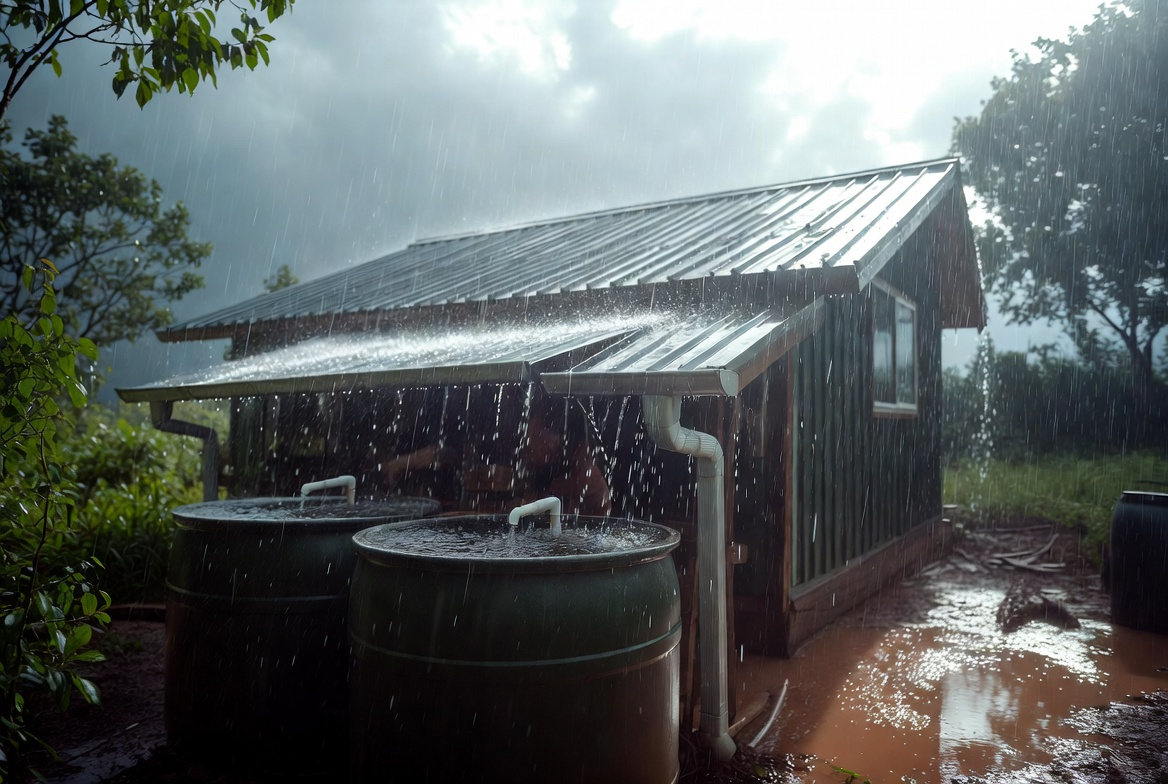
Install seamless gutters with leaf guards to minimize clogs.
Add a first-flush diverter to discard the dirtiest initial runoff (the first 0.1–0.2 inches of rain).
This simple device dramatically improves water quality before it enters storage.
Step 3: Choose and Size Your Storage
Storage is where most systems fail if undersized.
Start with at least 1,000–2,000 gallons for a small family.
Food-grade plastic or stainless tanks are safest and longest-lasting.
The SKM Collapsible Portable Rain Barrel (53 Gallon) is an excellent starter that folds for easy transport and setup — perfect for testing or small-scale use.
For larger needs, multiple barrels or a single 1,000+ gallon cistern works best.
Place tanks on a level, shaded spot to prevent algae growth.
Step 4: Filtration and Treatment
Rainwater is naturally soft and low in minerals, but it can pick up roof debris, bird droppings, and atmospheric pollutants.
Basic setup:
- Leaf screen on gutters
- First-flush diverter
- Pre-filter (50-micron screen)
- Main filter (5–20 micron)
- UV sterilizer or simple bleach treatment for drinking
Many people use a gravity-fed system with a ceramic filter for daily drinking water.
Test your water annually for bacteria and adjust treatment accordingly.
Step 5: Distribution and Usage
- Gravity feed works for low-pressure needs (gardens, toilets).
- Add a 12V pump powered by your solar system for indoor pressure.
- Use separate lines for potable vs non-potable water to avoid cross-contamination.
- Insulate pipes in cold climates to prevent freezing.
Common Mistakes Beginners Make
- Undersizing storage and running dry in summer.
- Skipping first-flush diverters and getting contaminated water.
- Using non-food-grade tanks that leach chemicals.
- Not testing water quality before drinking.
- Forgetting overflow drains and causing flooding around tanks.
Making Rainwater Harvesting Stick for the Long Term
- Inspect gutters and screens every season.
- Clean tanks annually.
- Keep a simple log of rainfall and usage.
- Add extra barrels as your needs grow.
- Many people start small and expand to 5,000+ gallons over a few years.
Connect This Decision to the Rest of Your Off-Grid Journey
Once your rainwater system is flowing, the next priority is usually energy.
Pair your water setup with a beginner solar system using Off Grid Solar Power Systems: Beginner Guide — the pump and UV sterilizer run perfectly on solar power.
Your harvested water also makes daily life smoother — see Off Grid Daily Life: Mindset & Routine Tips for routines that match your new independence.
If you’re still learning basic skills for your property, the water-sourcing techniques from Finding & Purifying Water Sources: Survival Guide for Beginners complement rainwater perfectly as a backup method.
FREQUENTLY ASKED QUESTIONS:
How much rainwater can I realistically collect?
A 1,000 sq ft roof in 40 inches of annual rain collects about 25,000 gallons per year — enough for most small families with good storage.
Is rainwater safe to drink straight from the tank?
No — always filter and treat it (UV, boiling, or bleach) to kill bacteria and pathogens before drinking.
Can I harvest rainwater in a dry climate?
Yes — even 15–20 inches of rain can provide significant water with a large roof and oversized storage.
Do I need permits to install a rainwater system?
It depends on your county — some require permits for large cisterns, but most allow small barrels without issue.
How do I prevent algae in my tanks?
Keep them shaded, use food-grade tanks, and add a small amount of hydrogen peroxide or keep water circulating.
Start your rainwater harvesting system today with just one barrel and a simple gutter setup.
The first time you drink water you collected from your own roof, you’ll feel that deep off-grid freedom.
It’s not complicated — it’s liberating.
You’ve got this.
Your water-independent future is waiting.
Ready for the next step? Head over to Building Off Grid Homes: Tiny Houses, Cabins & More and keep building your off-grid dream.