Off Grid Solar Power Systems: Beginner Guide
Imagine flipping a switch in your cabin and the lights come on.
No utility company.
No monthly bill.
Just clean, silent power from the sun you captured yourself.
That feeling of true energy independence is what off grid solar power systems deliver every single day.
And in 2026 it’s more affordable and beginner-friendly than ever before.
This guide gives you the complete, step-by-step system for designing and installing your first off grid solar power system.
You’ll learn how to calculate your exact power needs, choose the right panels and batteries, size your inverter and charge controller, plan for winter, and avoid the most expensive beginner mistakes.
By the end, you’ll have a clear roadmap to build a reliable solar system that powers your lights, fridge, tools, and even small appliances — all without ever paying another electric bill.
Why Off Grid Solar Power Systems Are the Smartest First Step
Electricity is the one thing almost every off-grid dream needs right away.
Without it, you’re stuck using noisy generators or living by candlelight.
A well-designed solar system gives you quiet, clean, reliable power 24/7 while slashing your long-term costs to nearly zero.
In 2026, panel prices have dropped dramatically and battery technology has improved so much that a complete beginner system can now power a small cabin for under $3,000.
The best part? Once installed, your system pays for itself in 4–7 years through eliminated utility bills and then runs almost free for 25+ years.
This single upgrade also pairs perfectly with everything else you’ll do off-grid — from rainwater collection to daily life routines.
Step 1: Calculate Your Real Power Needs (The Foundation)
Before buying anything, know exactly how many watts you use each day.
List every appliance and light you plan to run.
Example daily loads for a small off-grid cabin:
- LED lights: 200 watt-hours
- Small fridge: 800 watt-hours
- Laptop & phone charging: 150 watt-hours
- Water pump: 300 watt-hours
- Ceiling fan: 200 watt-hours
Add them up and multiply by 1.5 to account for cloudy days and inefficiency.
That number (in watt-hours) is your daily target.
Most beginners start with a 1,000–2,000 watt-hour system and expand later.
Step 2: Choose the Right Solar Panels
Panels are the heart of your system.
For beginners, 200-watt monocrystalline panels are the sweet spot — efficient, affordable, and easy to mount.
The ECO-WORTHY 200W 12V Solar Panel Starter Kit is an excellent complete starter package that includes panels, charge controller, and cables.
It’s designed for easy setup and can power lights, fans, and small appliances right out of the box.
Mount panels facing south at an angle equal to your latitude plus 15 degrees in winter.
Clear any shading from trees or buildings — even partial shade can cut output by 50%.
Step 3: Size Your Battery Bank Correctly
Batteries store power for nighttime and cloudy days.
Lithium (LiFePO4) is now the best choice for beginners — lighter, longer-lasting, and safer than old lead-acid batteries.
Rule of thumb: Size your bank to store at least 2–3 days of your daily usage.
For a 1,500 watt-hour daily need, plan for 4,500–6,000 watt-hours of storage.
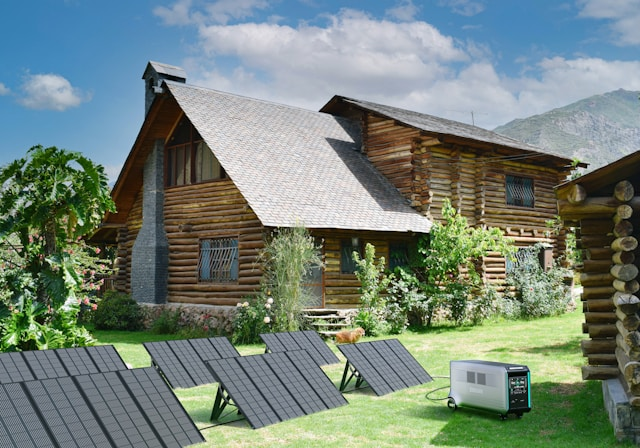
The EF ECOFLOW Portable Power Station DELTA 2 is a fantastic plug-and-play option that combines batteries, inverter, and solar input in one compact unit — perfect for testing your setup before committing to a full fixed system.
Step 4: Pick the Right Charge Controller and Inverter
The charge controller protects your batteries from overcharging.
Go with an MPPT controller — it’s 20–30% more efficient than PWM models.
Your inverter turns DC power into usable AC power.
Choose a pure sine wave inverter (at least 2,000 watts for most cabins) so sensitive electronics like laptops run safely.
Step 5: Wiring, Safety, and Expansion Planning
Use proper solar cable (10–12 AWG) and MC4 connectors.
Install fuses and a disconnect switch for safety.
Ground everything correctly.
Design your system so you can easily add more panels and batteries later — most people double their capacity within two years.
Common Mistakes Beginners Make
Buying the cheapest panels without checking efficiency ratings.
Undersizing the battery bank and running out of power on cloudy days.
Ignoring temperature effects (cold weather reduces battery capacity).
Skipping proper fuses and safety disconnects.
Placing panels in shaded areas or at the wrong angle.
Making Your Solar System Stick for the Long Term
Start small and expand.
Many people begin with one or two panels and a portable station, then add more as they gain confidence.
Check connections and clean panels every 3–6 months.
Keep a simple log of daily production and usage — it helps you spot issues early.
The Renogy 200 Watt 12 Volt Foldable N-Type Portable Solar Suitcase is a great portable addition for camping trips or extra power during setup.
Connect This Decision to the Rest of Your Off-Grid Journey
Once your solar system is running, the next logical step is securing water.
Capture free water right away with Rainwater Harvesting for Off Grid Living.
Your new energy independence also makes daily life much smoother — see Off Grid Daily Life: Mindset & Routine Tips for practical routines that match your solar lifestyle.
And if you’re still building basic survival skills for your property, the fire-starting techniques from Fire Starting Techniques: Wet Weather & Primitive Methods provide a reliable backup when the sun isn’t shining.
FREQUENTLY ASKED QUESTIONS:
What is the best battery type for off-grid solar?
LiFePO4 lithium batteries are now the top choice because they last 10+ years, weigh less, and handle deep discharges safely.
Can I start with a portable system and expand later?
Yes — many people begin with a portable power station and foldable panels, then add fixed roof or ground panels as their needs grow.
How long do solar panels actually last?
Quality panels produce 80–90% of their original power after 25 years, making them one of the most reliable investments you’ll ever make.
Do I need a permit to install off-grid solar?
It depends on your county — some require permits while others do not for systems under a certain size. Always check local rules first.
What happens if I have several cloudy days in a row?
A properly sized battery bank plus a small backup generator or extra portable panels will keep you powered through extended bad weather.
Start building your off-grid solar power system today with just one calculation.
The freedom of making your own electricity is closer than you think.
When the sun powers your lights, fridge, and tools every single day, you’ll wonder why you waited so long.
You’ve got this.
Your independent, sun-powered future is waiting.
Ready for the next step? Head over to Rainwater Harvesting for Off Grid Living and keep building your off-grid dream.