
Finding and Purifying Water Sources: Survival Guide for Beginners
Water is the most critical need in any survival situation. You can survive weeks without food, but only about 3 days without water.
In hot, dry, or high-exertion conditions, that window shrinks fast. Dehydration clouds judgment, weakens muscles, and turns small problems into emergencies.
The good news is that water is often closer than you think, even in the woods. With the right techniques, you can find safe sources and make them drinkable.
This guide covers the most reliable ways to locate water in any environment and purify it using minimal gear or improvised methods. These are essential survival skills that can keep you sharp and alive until help arrives.
What Does Finding & Purifying Water Involve?
Finding water means locating natural sources such as streams, seeps, rainwater, morning dew, or plant transpiration.
Purifying water means removing or killing pathogens (bacteria, protozoa like giardia, viruses) so it’s safe to drink.
Common Methods:
- Finding: Look for low ground (valleys, depressions), animal tracks, green vegetation, or dig in dry stream beds.
- Purifying: Boil for 1 minute (kills most pathogens), filter through cloth/charcoal/sand, use chemical tablets (chlorine dioxide or iodine), or solar still (evaporation).
Boiling is the most reliable when fire is possible; filtration + tablets work when fire isn’t an option.
Why Water Is Non-Negotiable in Survival
Dehydration starts subtly—dry mouth, headache, dark urine—then escalates to confusion, dizziness, and poor decisions. In survival, bad decisions compound everything else.
Water keeps your mind clear, body strong, and energy steady.
Many lost hikers in British Columbia have lasted days by collecting morning dew on leaves or boiling stream water over a small fire.
Those who ignored thirst or drank untreated water often faced giardia or severe weakness, delaying rescue.

Step-by-Step: Finding Water Sources in the Woods
- Look for low ground — Water flows downhill. Valleys, depressions, and the bottom of slopes are prime spots.
- Follow animal signs — Tracks, droppings, or worn paths often lead to water.
- Check green vegetation — Lush plants (ferns, moss, willows) indicate groundwater nearby.
- Dig in dry stream beds — Water often remains underground even when the surface is dry.
- Collect rainwater or dew — Use broad leaves, poncho, or a tarp to funnel rain; wipe dew from grass/leaves in the morning.
Best Purification Methods in Survival Situations
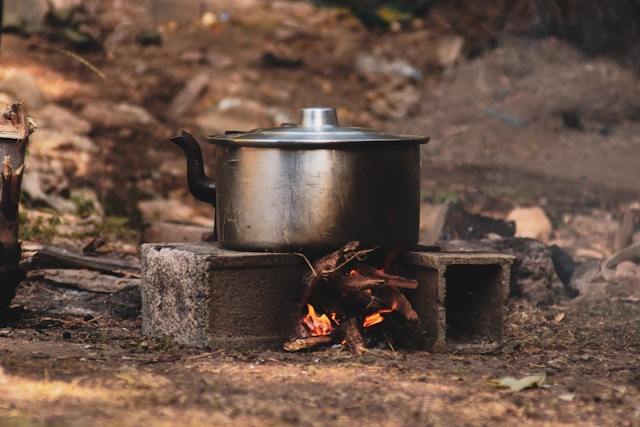
- Boiling (Most Reliable) Bring water to a rolling boil for 1 minute (3 minutes at high elevation). Kills bacteria, protozoa, and viruses. Use a metal container or hot rocks in a bark/wood vessel if no pot.
- Improvised Filtration + Treatment
- Layer cloth, charcoal (from fire), sand, and rocks in a bottle or dug channel to remove sediment.
- Follow with chemical tablets (chlorine dioxide preferred) or boil if possible.
- Try to carry with you a Water Filter Straw, they allow you to drink from numerous water sources safely
- Solar Still (No Fire Needed) Dig a hole, place a container in the center, cover with plastic (poncho/emergency blanket), weight the center with a rock over the container. Add green vegetation around the hole. Sun evaporates moisture; condensation drips into the container. Slow (a cup or two per day) but purifies somewhat.
Common Mistakes to Avoid
- Drinking untreated stream water long-term — giardia risk is high in beaver areas.
- Ignoring mild thirst — dehydration snowballs quickly.
- Contaminating your container — keep the lip clean.
- Over-relying on solar stills — low yield in cloudy/wet climates.
Real-Life Examples
In 2025, a hiker lost in the Pacific Northwest collected morning dew on plastic and boiled stream water over a small fire. He stayed hydrated and clear-headed for 3 days until rescue. Another survivor used a solar still during a dry stretch and reported enough water to keep going until found.
These techniques have turned desperate situations into manageable waits.
How to Practice Before You Need It
- On hikes, practice finding water signs (low ground, animal tracks, green plants).
- Test boiling water at home or on a safe campout.
- Try a small solar still in your backyard on a sunny day.
- Pick yourself up a Water Filter Straw and always keep it with you outdoors

How to Practice Before You Need It
- On hikes, practice finding water signs (low ground, animal tracks, green plants).
- Test boiling water at home or on a safe campout.
- Try a small solar still in your backyard on a sunny day.
- Pick yourself up a Water Filter Straw and always keep it with you outdoors
The more you practice, the faster and more confident you’ll be in real scenarios.
Conclusion
Finding and purifying water sources is one of the most critical survival skills essentials. Streams, dew, rainwater, and seeps are often nearby if you know where to look.
Boil when possible, filter and treat when you can’t, and never ignore thirst. These steps keep your mind sharp and body strong until help arrives.
Practice them now. Carry a lightweight filter or tablets. You’ll never regret being ready.