
Fire Starting Techniques: Wet Weather & Primitive Methods
Fire is the ultimate survival tool. It warms you, purifies water, cooks food, signals rescuers, and lifts your spirits when everything feels hopeless.
But in wet, windy, or cold conditions—common in many forests—the fire you need most is often the hardest to start. Matches fail, lighters fizzle, and everything seems soaked.
The good news is that reliable fire starting techniques exist for exactly these situations. Whether you’re using modern gear in the rain or primitive methods with nothing but what the forest provides, you can get a fire going.
This guide covers the most effective wet-weather and primitive fire starting techniques, step by step, so you’re never left cold and helpless.
What Are Wet Weather & Primitive Fire Starting Techniques?
Wet weather fire starting techniques are methods designed to ignite and sustain a fire when fuel, tinder, and the environment are damp or soaked. Primitive fire starting techniques use only natural materials and friction or percussion—no modern tools.
Common wet-weather methods include Ferro rods, Waterproof Matches, and prepared tinder bundles. Primitive methods include bow drill, hand drill, fire plow, and flint & steel.
Both categories prioritize dry inner wood, tinder prep, and proper structure to overcome moisture and wind.
These techniques are taught by survival schools and used in real rescues because they work when conditions are at their worst.

Why Fire Starting Matters in Wet Weather
Wet conditions make fire starting a challenge, but they also make fire more critical. Hypothermia sets in fast when you’re wet and cold—even in mild temperatures.
Fire dries clothes, warms your core, and lets you boil water to stay hydrated. It’s also a powerful signal: smoke by day, flame by night.
Real example: In rainy Pacific Northwest hikes, many lost or injured people have been found because rescuers spotted smoke from a fire started with a ferro rod and dry tinder from under logs. Those without fire often suffered exposure injuries.
Wet Weather Fire Starting Techniques
Ferro Rod (Ferrocerium Rod) – Most Reliable in Rain
A Ferro rod throws hot sparks (up to 5,500°F) even when wet. It’s one of the best tools for damp conditions.
Steps:
- Gather tinder: Dry inner bark (birch, cedar), pine needles, or pre-prepared cotton balls with petroleum jelly.
- Shave a small pile of tinder into a bird’s-nest shape.
- Hold the rod steady and scrape firmly with a knife or striker to send sparks into the tinder.
- Blow gently to turn sparks into flame.
Tip: Store your Ferro rod in a waterproof container with striker attached.


2. Waterproof Matches & Lighters
Keep these as backup. Waterproof matches (strike-anywhere) and windproof lighters (e.g., Bic with tape over the flint wheel) work when protected.
Steps:
- Shield the match/lighter from wind/rain with your body or a hat.
- Light pre-prepared tinder bundle first.
- Feed small, dry kindling gradually.
Primitive Fire Starting Techniques
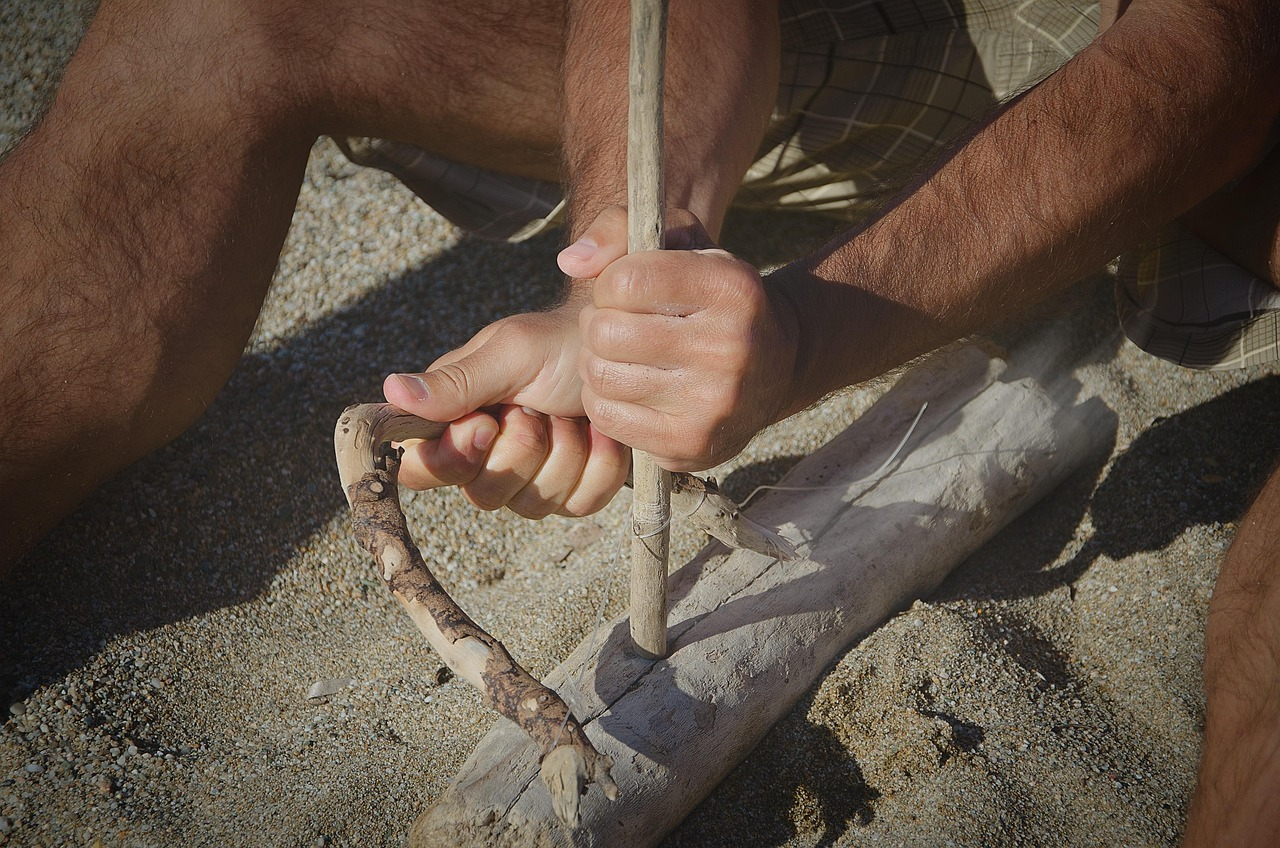
Bow Drill – Most Reliable Primitive Method
Uses friction to create an ember in dry wood.
Materials needed:
- Bow (curved stick + paracord or shoelace)
- Spindle (straight, dry stick)
- Fireboard (flat, dry wood)
- Socket (rock or wood with dimple)
- Tinder bundle


Steps:
- Cut a small notch in the fireboard.
- Spin the spindle rapidly in the notch using bow motion.
- Apply downward pressure with socket.
- When an ember forms, transfer to tinder and blow gently.
2. Hand Drill Fire Starting (No Tools)
- Transfer the ember into dry tinder and gently blow until it catches fire
- Gather a straight, dry hardwood spindle and a flat, softer wood fireboard.
- Carve a small V-notch near the edge of the fireboard to catch the ember.
- Place the spindle tip in the notch and spin it rapidly between your palms while pressing down firmly.
- Continue spinning faster and harder until thick smoke appears and a glowing ember forms.
Gathering & Preparing Tinder in Wet Weather
- Inner bark (birch, cedar) — peels off dry even in rain.
- Pine needles, fatwood (resin-rich pine knots) — burns hot and long.
- Pre-prepared: Cotton balls + petroleum jelly (waterproof, long-burning).
Store tinder in pockets or a ziplock bag to keep dry.
Fire Structure for Wet Conditions
- Teepee — Quick ignition, good airflow.
- Log cabin — Stable, sustained burn.
- Swedish torch (split log standing) — Burns inward, sheltered.
Start small and feed gradually.

Common Mistakes to Avoid
- Using wet ground-level wood — always collect from under logs or standing dead branches.
- Smothering embers — feed tiny amounts first.
- Poor location — build under cover, away from wind.
Real-Life Examples
Last year a lost hiker in northern British Columbia started a fire with a Ferro Rod and dry tinder from under a log. The smoke plume helped rescuers locate him within hours. Primitive bow drill has been used by survivalists in prolonged wet conditions to stay warm when modern tools failed.
How to Practice Fire Starting Before You Need It
- Practice Ferro Rod on dry days — aim for 30-second fires.
- Try bow drill in your backyard with dry wood.
- Test different tinders to see what ignites fastest.
The more you practice, the more confident you’ll be when conditions are tough.
Conclusion
Fire starting techniques for wet weather and primitive methods are life-saving skills every outdoors person should know. A ferro rod gives reliability in rain; bow drill and hand drill give you options when gear fails.
Gather dry tinder, build smart, and practice regularly. These survival skills essentials turn a cold, wet night into a survivable one.
Stay prepared. Stay warm. You’ve got this.