Green Cleaning: Non-Toxic Home Products Guide
Imagine walking into your home and taking a deep breath.
No harsh chemical smells linger in the air.
No worry about what your kids, pets, or even you are touching on countertops and floors.
Just clean, fresh surfaces and peace of mind that everything is safe and effective.
That healthy, toxin-free home is exactly what green cleaning delivers in 2026.
And the best part? You don’t need expensive store-bought products or complicated routines to get there.
This guide gives you a complete, beginner-friendly system for non-toxic home products.
You’ll discover the science behind simple ingredients, exact DIY recipes with precise measurements, room-by-room strategies, cost comparisons, safety tips, common pitfalls, and long-term habits that make chemical-free cleaning effortless and even enjoyable.
By the end, you’ll have everything you need to replace every toxic cleaner in your house with safe, effective, and often cheaper alternatives that actually work better over time.
Why Green Cleaning Matters More Than Ever in 2026
Most conventional cleaners contain harsh chemicals that linger in the air and on surfaces long after you use them.
These residues can trigger allergies, respiratory issues, skin irritation, and even hormone disruption — especially harmful for children and pets who spend the most time close to floors and counters.
The EPA has linked many common household cleaners to increased risk of asthma and other health problems.
When you switch to non-toxic home products, you eliminate those risks while also protecting the environment.
Wastewater from traditional cleaners pollutes rivers and oceans.
Green cleaning keeps those toxins out of the water cycle and reduces plastic packaging waste dramatically.
Families who make the switch consistently report:
- Fewer allergy symptoms and better indoor air quality
- Lower spending on cleaning supplies over time
- Greater peace of mind knowing their home is truly safe
- A satisfying feeling of closing the loop with the rest of their sustainable lifestyle
This habit pairs beautifully with the sustainable textiles you learned in Eco-Friendly Fashion: Sustainable Textiles Guide — because the same thoughtful approach applies to both your clothes and your cleaning routine.
The Core Ingredients That Do All the Heavy Lifting
You only need a handful of inexpensive, natural items to replace almost every cleaner in your house. Here’s why each one works so well.
White Distilled Vinegar

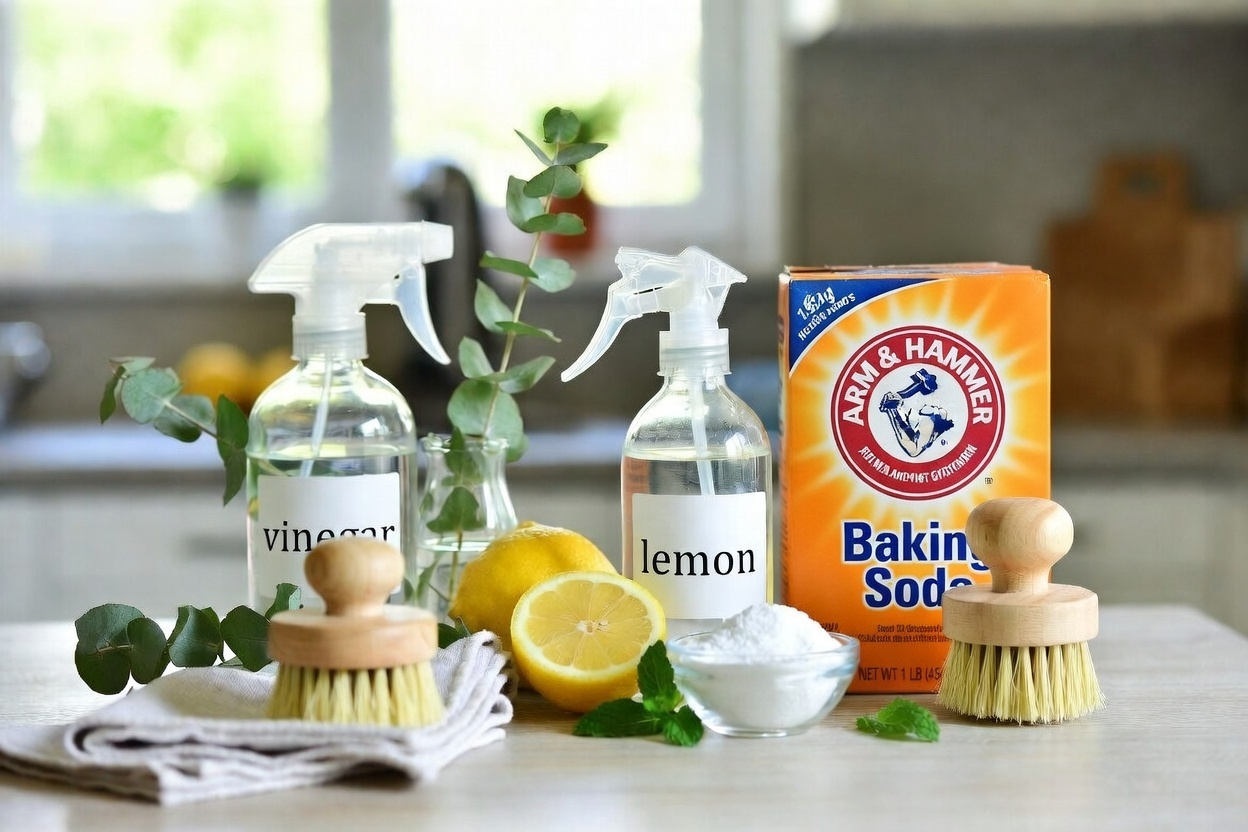
Distilled White Vinegar is naturally antibacterial and antifungal.
It cuts through grease, dissolves mineral deposits, and deodorizes without leaving residue.
A 5% acidity solution is powerful yet completely safe.
Baking Soda

Baking Soda, like Arm and Hammer Baking Soda can be used as a gentle abrasive that lifts stains and neutralizes odors.
It also softens water and boosts other cleaners when combined with vinegar.
Castile Soap

Pure Castile Soap is plant-based and biodegradable. Made with vegetable oils (traditionally olive oil) rather than animal fats or synthetic chemicals.
It creates a mild lather that cleans without stripping surfaces or leaving toxic film.
Lemon Juice

Lemons are powerful, natural cleaners due to their high citric acid content.
This kills bacteria, cuts grease, removes stains, and neutralizes odors.
Essential Oils (Tea Tree, Lemon, Lavender)
Add antimicrobial and pleasant scent properties.
Tea tree is especially strong against mold and bacteria.

Essential oils for cleaning, such as Majestic Pure Tea Tree oil, peppermint, and lavender, offer natural, antimicrobial, and aromatic alternatives to harsh chemicals.
They are ideal for disinfecting surfaces, degreasing, and deodorizing.
Hydrogen Peroxide (3%)

Hydrogen Peroxide is a natural disinfectant and whitener that breaks down into water and oxygen.
Perfect for sanitizing without harsh fumes.
Essential Values Peroxide Cleaner 5% is a good bulk option for cleaning.
DIY Non-Toxic Recipes You’ll Use Every Week
All-purpose cleaner
- Mix 2 cups water,
- 1 cup vinegar,
- 1 teaspoon castile soap,
- and 10–15 drops lemon or tea tree essential oil in a spray bottle.
Shake before each use.
This formula tackles counters, tables, and light stains while leaving no harmful residue.
Bathroom scrub
- Combine 1 cup baking soda,
- 1/4 cup castile soap,
- 10 drops tea tree oil, and enough water to make a paste.
Apply to tubs, tiles, and sinks, let sit 5 minutes, then scrub.
It removes soap scum and kills mold naturally.
Glass and mirror spray
- 1 part vinegar,
- 1 part water,
- plus 5 drops lemon essential oil.
Use with a microfiber cloth for streak-free shine that lasts longer than chemical versions.
Floor cleaner
- 1 gallon warm water,
- 1/4 cup castile soap,
- 1/4 cup vinegar,
- and 10 drops lavender oil.
Mop as usual.
Safe for wood, tile, and laminate.
Oven cleaner
- Make a paste of baking soda and water,
- spread on grime,
- spray with vinegar,
- let sit overnight, then wipe.
No toxic fumes and no harsh scrubbing needed the next day.
These recipes take minutes to make and work better than many store-bought options once you get the ratios right.

Room-by-Room Green Cleaning System
Kitchen
- Use the all-purpose spray daily on counters and the baking soda paste for stovetop grease.
- Wipe the fridge with a vinegar-water mix to eliminate odors naturally.
- Many families also keep a reusable spray bottle filled with homemade cleaner right under the sink.
Bathroom
- The bathroom scrub handles tubs and tiles while the all-purpose spray takes care of mirrors and faucets.
- For toilets, sprinkle baking soda, spray vinegar, and let it fizz for 10 minutes before brushing. This routine keeps mold and mildew at bay without bleach fumes.
Living Areas & Bedrooms
- Dust with a damp microfiber cloth and a few drops of essential oil in water.
- For carpets and upholstery, sprinkle baking soda, let sit 15 minutes, then vacuum. It lifts odors and freshens fabric safely.
Floors & Outdoor Spaces
- The floor cleaner works on every surface type.
- For patios or outdoor cleaning, collect rainwater in a barrel and mix with castile soap for eco-friendly power washing.
- The SKM Collapsible Portable Rain Barrel (53 Gallon) makes it easy to have free, soft water ready for all your green cleaning needs without tapping the main supply.

Common Mistakes People Make (and How to Fix Them Fast)
- Using too much vinegar on natural stone surfaces can etch them over time — always dilute heavily and test first.
- Skipping the rinse step after baking soda paste leaves a cloudy film — a quick wipe with plain water fixes it.
- Adding essential oils to hot water destroys their properties — always use room-temperature or cool mixtures.
- Assuming “natural” means no testing — always spot-test new recipes on hidden areas first.
- Over-relying on one ingredient — rotate recipes to prevent buildup and keep surfaces truly clean.
Making Green Cleaning Automatic and Enjoyable
- Keep a small kit of your core ingredients in a caddy under the sink.
- Make a fresh batch of all-purpose cleaner every Sunday while you review your meal plan.
- Label spray bottles clearly with dates so you know when to refresh.
- Involve the family by assigning simple tasks like “vinegar spray duty” to kids — they love watching the fizzing reactions.
- Most people notice fresher air and fewer allergy symptoms within the first two weeks.
- After 30 days the routine feels completely natural.
Connect Green Cleaning to the Rest of Your Sustainable Life
- Once you’re cleaning without toxins like a pro, the next steps become even easier.
- Your mindful approach pairs perfectly with the sustainable textiles from Eco-Friendly Fashion: Sustainable Textiles Guide and the local seasonal food habits from Local Seasonal Food: Easy Support Tips — because clean produce and clean fabrics both benefit from non-toxic methods.
- If you ever build an emergency shelter or off-grid cabin, these same natural cleaners keep your space hygienic and safe, tying directly into How to Build an Emergency Shelter in the Woods: Quick Steps.
FREQUENTLY ASKED QUESTIONS:
What are some simple green cleaner recipes?
Vinegar and baking soda combinations are highly effective for most surfaces and leave no harmful residue behind.
How do I make my own natural cleaning products?
Mix basic pantry items like vinegar, baking soda, castile soap, and a few drops of essential oil in a spray bottle for safe, powerful results.
Are vinegar and baking soda safe for all surfaces?
Yes on most hard surfaces, but always test first on natural stone or unsealed wood to avoid etching or dulling.
Can I use essential oils in homemade cleaners?
Yes — a few drops of tea tree, lemon, or lavender add antimicrobial power and pleasant scent without any toxic fumes.
Start your green cleaning journey today with just one recipe — maybe the all-purpose spray this evening.
The more you replace toxic products, the healthier your home becomes and the better you feel every single day.
You’ve got this. Your family, your pets, and the planet are all going to thank you.
Ready for the next step? Head over to Local Seasonal Food: Easy Support Tips and keep building your sustainable lifestyle.