How to Forage Safely: Beginner Guide to Edible Plants
Foraging for wild edible plants is one of the most rewarding outdoor skills you can learn. A handful of safe greens or berries can turn a long hike into a meal, provide emergency calories when supplies run low, and deepen your connection to the land. But the wrong choice can make you sick—or worse.
The key to foraging safely as a beginner is simple: start small, learn positively identified plants, and never eat anything you can’t 100% confirm is safe.
This guide focuses on beginner-friendly edible plants, universal safety rules, common poisonous look-alikes, and how to forage responsibly in 2026. These are practical survival skills essentials that work anywhere, especially in forests and trails near home.

What Is Safe Foraging?
Safe foraging means identifying and harvesting wild edible plants while avoiding poisonous or harmful ones. The golden rule for beginners is: eat only plants you can positively identify as safe—never guess or rely on “it looks edible.”
Core safety rules:
- Use multiple identification features (leaves, flowers, smell, habitat, taste test on small amount if safe).
- Avoid plants with milky sap, three-leaf patterns, or bitter taste unless you know them (e.g., dandelion is safe).
- Start with “universal edibles” — plants almost impossible to misidentify.
- Forage only in clean areas (away from roads, pesticides, dog areas).
- Harvest sustainably — take only what you need, leave roots intact.
Why Safe Foraging Matters in Survival & Everyday Life
Foraging adds calories, vitamins, and morale when you’re low on food. In survival, wild plants can bridge the gap between hunger and energy. Even on day hikes, knowing a few safe edibles gives confidence and reduces pack weight.
Many day hikers and backpackers in British Columbia have used dandelion greens or cattail roots to supplement meals when they ran low.
Those who skipped safety checks and ate unknown plants often ended up with stomach issues that slowed them down or required evacuation.
Universal Edible Plants for Beginners

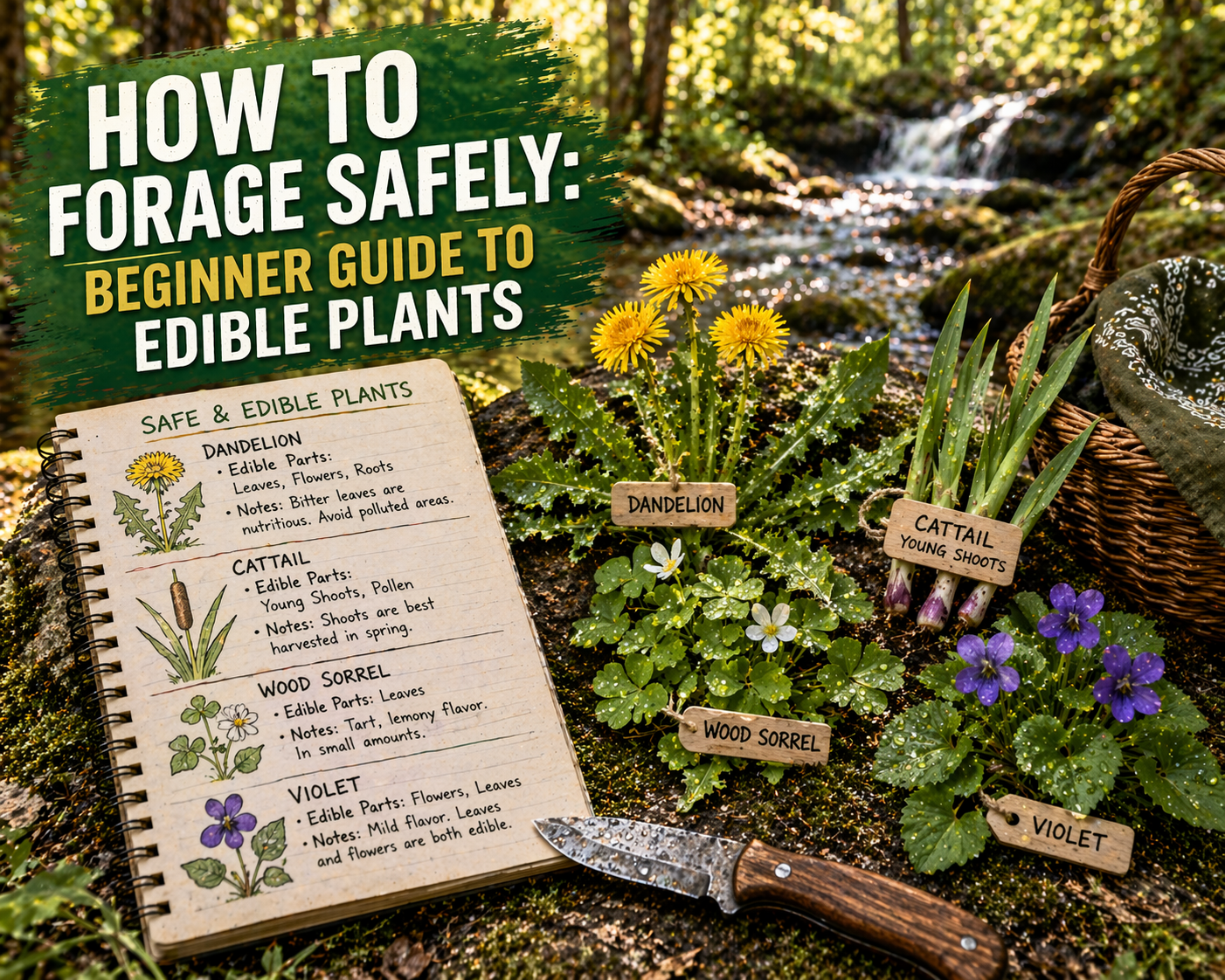
Dandelion (Taraxacum officinale)
- Leaves: jagged, grow in rosette, milky sap when broken.
- Flowers: bright yellow.
- Safe use: young leaves in salads, roots roasted for tea.
- Look-alike warning: none dangerous.
Cattail (Typha latifolia)
- Tall reed with brown “cigar” flower spike.
- Safe use: young shoots (like asparagus), pollen for flour, roots cooked.
- Look-alike warning: iris (toxic) has flat leaves, no cigar.


Wild Strawberry (Fragaria vesca)
- Three-leaf clusters, white flowers, small red berries.
- Safe use: berries and leaves for tea.
- Look-alike warning: false strawberry (yellow flowers, no flavor).
Poisonous Plants to Avoid (Red Flags)
Never eat if you see:
- Milky sap (except dandelion)
- Three-leaf pattern (poison ivy, poison oak)
- Umbrella-shaped flower clusters (hemlock, water hemlock)
- Bitter or soapy taste
- Beans or pods unless you know them (e.g., fava beans are cultivated)
Common dangerous look-alikes:
- Poison hemlock vs. Queen Anne’s lace (hemlock has purple spots on stem)
- Death camas vs. wild onion (camas has no onion smell)
Rule: When in doubt, leave it out.
Universal Safety Rules for Beginners
- Positive identification — Use at least 3 identifying features.
- Small taste test — If safe, touch to lip, wait 15 min; small bite, wait 8 hours.
- Start with one plant — Eat only one new plant per day.
- Know your region — Plants vary by climate (BC has abundant dandelion, cattail, salmonberry).
- Sustainable harvesting — Take only 10–20% from any patch.
Tools & Resources for Safe Foraging
- Field guide: “Foraging Secrets” is a wonderful reference guide for beginners.
- App — PictureThis or iNaturalist (for photo ID confirmation)
- Notebook — Sketch and note features for future reference
Real-Life Examples
In 2025, a day hiker in the North Shore mountains used dandelion greens and plantain leaves to supplement lunch when they ran out of snacks. Another group safely harvested salmonberries (safe red berries) after confirming with a guidebook similar to This Guide.
Those who followed safety rules enjoyed the food; those who guessed often regretted it.
How to Practice Foraging Safely
- Start in your backyard or local park with dandelion and plantain.
- Join a local foraging walk or class.
- Take photos and compare with guidebooks/apps.
The more you practice, the more confident and safe you become.
Conclusion
Foraging safely opens up nature’s pantry—free, fresh food that connects you to the land. Start with universal edibles like dandelion, cattail, plantain, and wild strawberry.
Follow the safety rules religiously: positive ID, small tests, regional knowledge, and sustainable harvesting. These skills turn any walk outside into an opportunity.
Stay curious. Stay safe. You’ve got this.