
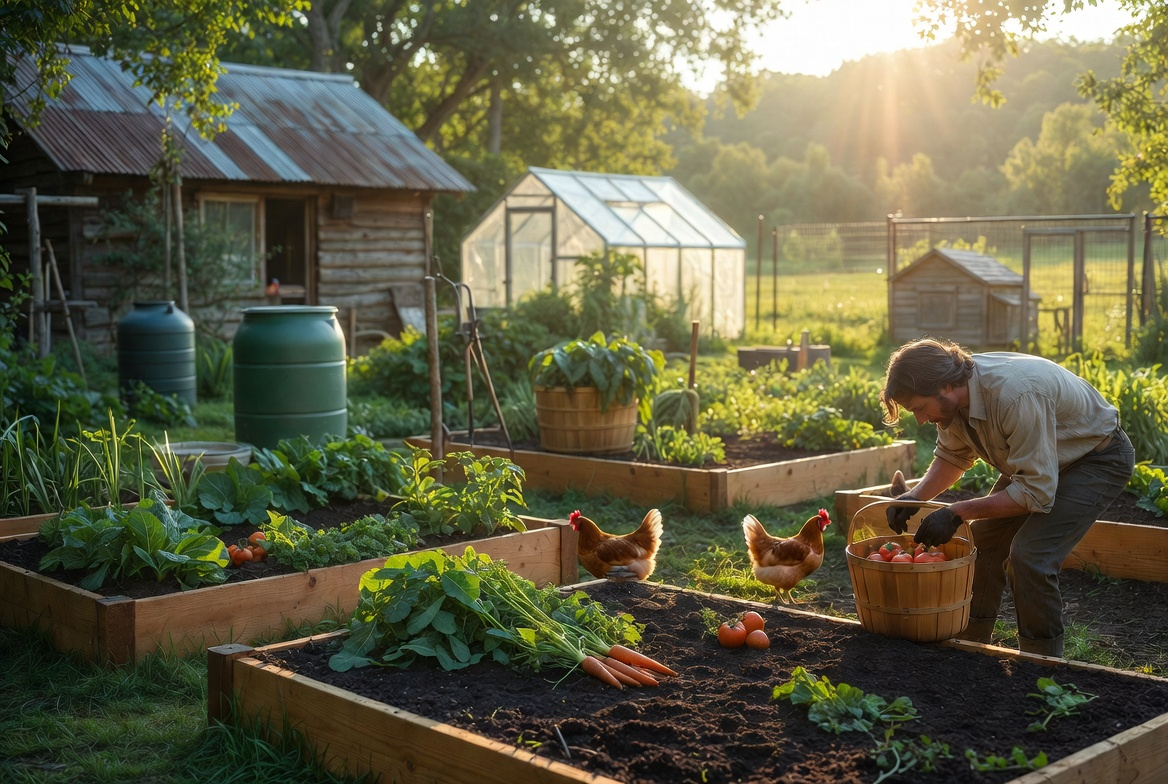
Growing Food Off Grid: Gardens & Livestock Basics
Imagine walking out your cabin door at dawn.
Picking fresh eggs from happy hens.
Harvesting tomatoes still warm from the sun.
Pulling carrots that taste like they just woke up.
No grocery store run.
No price tags.
Just food you grew yourself — free, clean, and bursting with flavor.
That deep satisfaction of feeding yourself off-grid is what growing food delivers every single day.
And in 2026, starting a productive garden and small livestock setup is easier and more rewarding than ever.
This guide gives you the complete beginner-friendly system for growing food off grid.
You’ll learn how to plan your garden layout for maximum yield, choose the best crops for your climate and soil, start seeds indoors, build raised beds, manage pests naturally, set up small livestock (chickens, goats, rabbits), feed them sustainably, preserve your harvest, and scale up without burning out.
By the end, you’ll have a clear plan to grow 50–80% of your own food — even starting from scratch on raw land.
Why Growing Food Off Grid Is the Ultimate Freedom Move
Off-grid living means cutting dependence — and food is the biggest remaining tie to the system.
The average family spends $1,000–$2,000 per month on groceries.
Growing your own slashes that number dramatically while giving you nutrient-dense food that’s fresher and tastier than anything shipped across continents.
In 2026, seed prices remain low, heirloom varieties are widely available, and natural pest control methods are proven and simple.
A well-planned off-grid garden can produce thousands of dollars worth of food per year on just ¼–½ acre.
Add small livestock and you close the protein loop too.
This single habit makes every other off-grid choice (solar, water, waste) feel more secure and complete.
Step 1: Assess Your Land & Climate
Walk your property and map:
- Sunny spots (6–8+ hours direct sun for most crops)
- Soil type (dig test holes — sandy drains fast, clay holds water)
- Wind patterns and frost dates
- Water access (rain barrels, pond, stream, or greywater)
Test soil pH and nutrients (cheap kits from garden centers).
Most off-grid land needs amendments — compost, aged manure, wood ash for acidity.
Choose crops that match your growing season: short-season varieties for cold climates, heat-tolerant for hot/dry areas.
Step 2: Plan Your Garden Layout for Maximum Yield
- Start small — 100–400 sq ft per person is plenty for beginners.
- Use raised beds (4×8 ft) for better soil control and easier weeding.
- Implement companion planting: tomatoes with basil (repels pests), beans with corn (nitrogen fixing).
- Incorporate perennials: asparagus, rhubarb, berries, herbs — they produce for years with little work.
- Add a small greenhouse or hoop house for season extension — adds months of fresh greens.
Step 3: Starting Seeds & Planting Basics
- Start seeds indoors 6–8 weeks before last frost.
- Use peat pots or recycled containers with good light (south window or grow lights).
- Harden off seedlings before transplanting.
- Direct sow easy crops: beans, peas, carrots, radishes.
- Mulch heavily (straw, leaves, wood chips) to retain moisture and suppress weeds.
Step 4: Natural Pest & Disease Management
- Prevent before you treat.
- Healthy soil = healthy plants.
- Encourage beneficial insects: plant marigolds, dill, yarrow.
- Use row covers for cabbage worms.
- Neem oil or insecticidal soap for aphids.
- Rotate crops yearly to break disease cycles.
- Compost tea (from your own compost pile) boosts immunity naturally.
Step 5: Small Livestock Basics (Chickens, Rabbits, Goats)
Chickens
- 3–6 hens per person for eggs.
- Mobile coops (chicken tractors) fertilize garden naturally.
- Feed scraps + layer feed + free-range time.
Rabbits
- Quiet, space-efficient, fast-growing meat.
- Raised hutches + pellet feed + greens.
- Manure is cold compost — excellent garden fertilizer.
Goats
- Milk, brush clearing, companionship.
- Need sturdy fencing and shelter.
- Browse + hay + grain.
- Start with 2–3 for milk and manure.
Step 6: Preserving Your Harvest
- Freeze: berries, beans, corn.
- Can: tomatoes, pickles, jams.
- Dehydrate: herbs, apples, jerky.
- Root cellar or cool storage for potatoes, squash, onions.
- Ferment: sauerkraut, kimchi for gut health.
Common Mistakes Off-Grid Gardeners Make
- Planting too much too soon and getting overwhelmed.
- Ignoring soil building — poor soil = poor yields.
- Not mulching and fighting weeds all summer.
- Overlooking water catchment — gardens die fast without rain backup.
- Starting livestock without predator-proofing first.
Making Food Growing Stick for the Long Term
- Start with 5–10 easy crops your first year.
- Keep a simple garden journal: what worked, what didn’t.
- Save seeds from your best plants.
- Build soil every fall with cover crops and compost.
- Involve the family — kids love planting and harvesting.
- Most people double their production in year two.
Connect This to the Rest of Your Off-Grid Journey
Once your garden and livestock are producing, water becomes even more critical.
Your crops will thrive with reliable collection — see Rainwater Harvesting for Off Grid Living.
Power your tools and lights for longer workdays with Off Grid Solar Power Systems: Beginner Guide.
If you’re foraging on your land, the skills from How to Forage Safely: Beginner Guide to Edible Plants add free nutrition.
And when you’re building your home around this food system, check Building Off Grid Homes: Tiny Houses, Cabins & More.
FREQUENTLY ASKED QUESTIONS:
How much land do I need to grow most of my food?
¼–½ acre is enough for a family of four with intensive methods; start with 100–400 sq ft per person.
What are the easiest first crops for beginners?
Radishes, lettuce, zucchini, beans, and tomatoes — fast-growing and forgiving.
Can I raise livestock without a lot of space?
Yes — chickens and rabbits thrive in small areas with mobile coops or hutches.
What’s the best way to store food long-term?
Root cellars for roots, freezing for berries/meat, canning for sauces, dehydrating for herbs.
Do I need to water every day off grid?
No — mulch heavily and use drip irrigation from rain barrels to cut watering to 1–2 times per week.
Start growing your first off-grid food today with just one raised bed or pot.
The first tomato you eat from your own plant will taste like victory.
It’s not about perfection — it’s about taking that first step toward feeding yourself forever.
You’ve got this.
Your land is ready to feed you.
Ready for the next step? Head over to Off Grid Waste Management: Simple Solutions and keep building your self-sufficient life.