
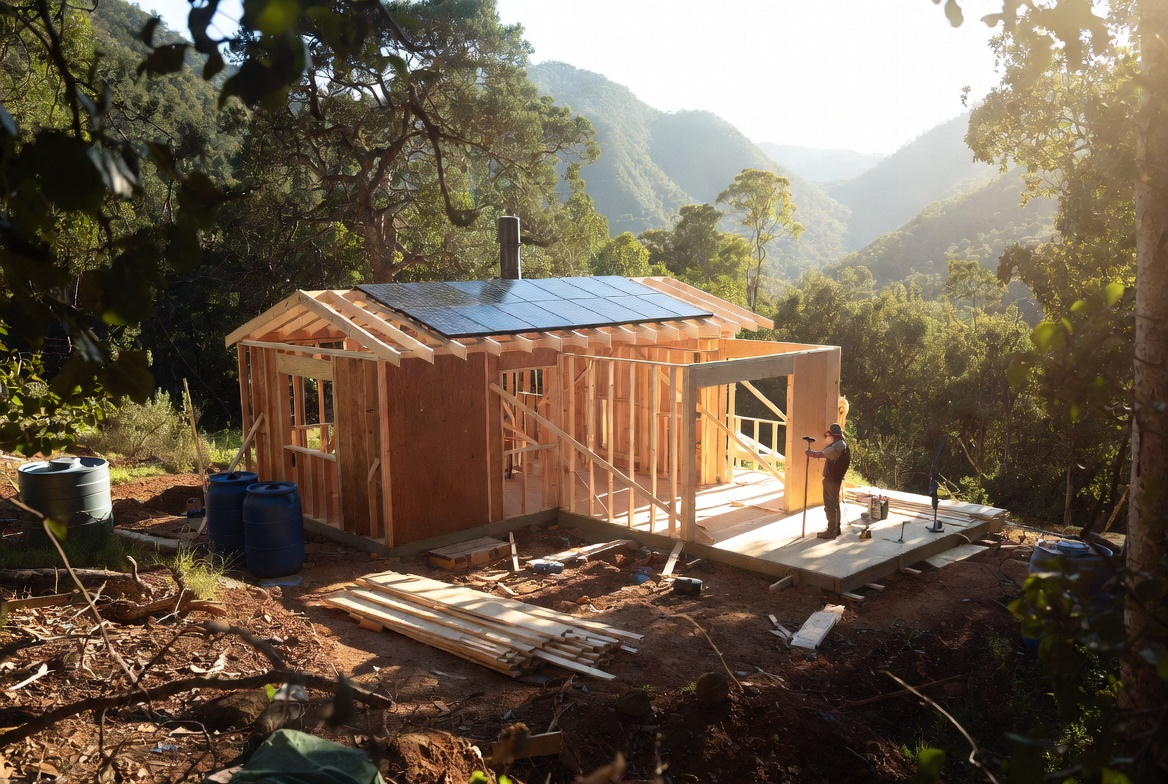
Building Off Grid Homes: Tiny Houses, Cabins & More
Imagine waking up in a cozy cabin you built yourself.
Sunlight streams through large windows.
A wood stove crackles softly.
Outside, your solar panels hum quietly while rainwater feeds your garden.
No mortgage payment due.
No HOA telling you what color your door can be.
Just you, your home, and the land — exactly how you designed it.
That freedom is what building off grid homes delivers.
And in 2026, tiny houses, cabins, and DIY structures are more accessible and practical than ever.
This guide gives you the complete beginner-friendly system for building your own off grid home.
You’ll learn the pros/cons of tiny houses vs cabins vs earth-sheltered, how to choose materials that last off-grid, step-by-step planning, permitting realities, insulation secrets for extreme weather, foundation options, and real cost breakdowns so you avoid the most expensive mistakes.
By the end, you’ll have a clear path to design and build a comfortable, durable, beautiful home that runs on solar, collects rainwater, and feels like it was always meant to be yours.
Why Building Off Grid Homes are Worth It
Most people dream of off-grid living but get stuck renting or buying someone else’s compromise.
Building off grid homes lets you customize everything: size, layout, energy systems, water, waste, even the view from your porch.
In 2026, material costs have stabilized, DIY resources are abundant, and permitting in rural areas has become more flexible for alternative builds.
A well-planned off-grid home can cost 30–60% less than a traditional house while delivering better energy efficiency and lower lifetime costs.
You end up with a structure that’s truly yours — no compromises on what matters most to your lifestyle.
Choosing Your Build Type: Tiny House, Cabin, or Other
- Tiny House on Wheels
- Pros: Mobile, lower permitting hurdles in many areas, quick to build (3–12 months).
- Cons: Limited space, often restricted by zoning, harder to expand.
- Best for: Singles, couples, or people who want flexibility to move later.
- Traditional Cabin (Stick-Built or Log)
- Pros: Permanent, easier to get financing/permits, expandable, feels like “home.”
- Cons: Longer build time, higher material costs, more labor.
- Best for: Families or long-term homesteaders.
- Earth-Sheltered / Bermed / Shipping Container
- Pros: Super energy-efficient, storm-resistant, low visual impact.
- Cons: Higher upfront engineering, potential moisture issues if not done right.
- Best for: Cold climates or people prioritizing extreme durability.
- Pick based on your budget, timeline, skills, and how long you plan to stay put.
Step-by-Step Planning Before You Hammer a Single Nail
- Finalize your land (water, sun, access — see previous article).
- Sketch your floor plan on graph paper or free software (SketchUp, Floorplanner).
- Calculate square footage: 200–400 sq ft for solo/couples, 600–1,200 for families.
- List must-haves: solar-ready roof, rainwater collection gutters, composting toilet space, wood stove chimney.
- Research local codes — call the county BEFORE buying materials.
Choosing Materials That Last Off Grid
Use durable, low-maintenance materials.
Metal roofing (galvanized or standing seam) sheds snow and lasts 50+ years.
SIP panels (structural insulated) or double-stud walls give excellent insulation without massive lumber use.
Avoid cheap vinyl siding — it cracks in cold and fades in sun.
For foundations, piers or helical piles work best on uneven land and avoid concrete slab issues in freeze-thaw cycles.
Insulation & Energy Efficiency Secrets
Off-grid homes live or die by insulation.
Aim for R-30+ walls and R-50+ roof.
Use rigid foam board under floors and spray foam for air sealing.
Passive solar design (large south-facing windows with overhangs) can cut heating needs by 30–50%.
The ECO-WORTHY 200W 12V Solar Panel Starter Kit is a great way to test your roof’s real solar potential during planning.
Foundation & Framing Basics
Piers or concrete blocks are cheapest and easiest for most off-grid builds.
They allow airflow underneath (prevents moisture) and work on sloped land.
Frame with 2×6 or 2×8 lumber for better insulation cavities.
Add cross-bracing and hurricane ties in windy areas.
Off-Grid Specific Features to Include
- Oversized roof overhangs for rain protection and solar shading
- Composting toilet rough-in
- Greywater system planning
- Wood stove with chimney thimble
- Extra-deep eaves for snow shedding
- Rain gutters with leaf guards feeding barrels or cisterns
Common Mistakes Off-Grid Builders Make
- Underestimating insulation needs and freezing in winter.
- Skipping professional engineering for foundations on sloped land.
- Not planning for moisture control (vapor barriers, ventilation).
- Building too big and running out of money or energy.
- Ignoring local codes and getting fined or forced to tear down.
Making Your Build Stick for the Long Term
- Start small — many people build a 200 sq ft core and add rooms later.
- Document every step with photos.
- Keep a simple build log for future repairs.
- Test systems (solar, water, heat) before moving in fully.
The Renogy 200 Watt 12 Volt Foldable N-Type Portable Solar Suitcase is a fantastic portable backup during construction — keeps tools charged and lights on before your main system is live.
Connect This Build to the Rest of Your Off-Grid Journey
Once your home is up, energy becomes the next priority.
Power your new space with Off Grid Solar Power Systems: Beginner Guide.
Collect free water for your build and daily use with Rainwater Harvesting for Off Grid Living.
If you’re starting small, the emergency shelter skills from How to Build an Emergency Shelter in the Woods: Quick Steps give you quick shelter during construction phases.
And when you head out to source materials or scout, proper gear makes it easier — see Beginner Hiking Gear: Essentials for New Hikers.
FREQUENTLY ASKED QUESTIONS:
What is the cheapest way to build off grid?
Start with a small cabin or tiny house on piers using reclaimed materials and DIY labor — many complete a 200–400 sq ft home for $15,000–$40,000.
Do I need permits for an off-grid home?
Yes in most counties — even remote land usually requires building permits, septic approval, and sometimes electrical inspections.
How small can I go and still live comfortably?
200–400 sq ft works well for singles/couples; add lofts or outdoor spaces to feel bigger.
What foundation is best for off-grid?
Piers or helical piles are usually easiest and cheapest — they work on uneven land and allow airflow underneath.
How long does it take to build an off-grid home?
DIY tiny house: 3–12 months; full cabin: 6–24 months depending on size and help.
Start planning your off-grid home today with just one sketch on paper.
The moment you decide to build exactly what you want, freedom stops being a dream and starts becoming a blueprint.
You’ve got this.
Your custom off-grid haven is waiting to rise.
Ready for the next step? Head over to Growing Food Off Grid: Gardens & Livestock Basics and keep building your self-sufficient life.