
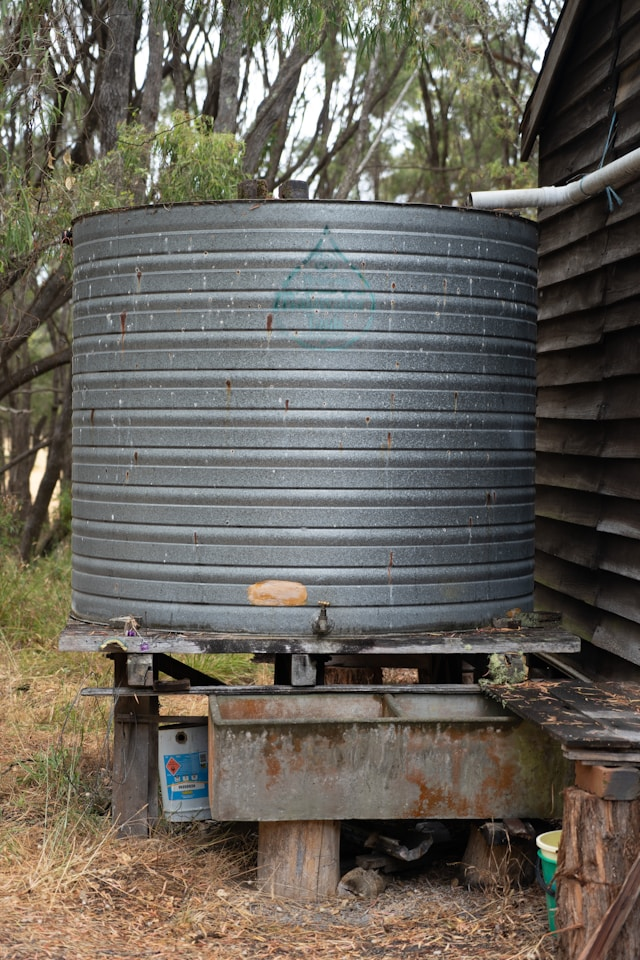
Off-Grid Water Systems: How to Harvest, Store & Purify Water
Picture this.
You wake up in your off-grid cabin, walk to the sink, and turn on the faucet.
Clean, fresh water flows freely.
No utility bill arrives in the mail.
No well-drilling nightmare stories.
No dependence on municipal systems that could fail tomorrow.

That quiet, powerful feeling of water independence is exactly what a well-designed off-grid water system delivers every single day.
And in 2026, the tools, filters, and storage options are more affordable and beginner-friendly than ever before.
This guide gives you the complete step-by-step system for harvesting, storing, and purifying water off grid.
You’ll learn how to calculate your real daily needs, choose the best collection method for your climate, select reliable storage tanks, build simple filtration and purification setups, maintain everything long-term, troubleshoot common problems, and scale the system as your household or homestead grows.
By the end, you’ll have a clear, practical plan that keeps your water clean, abundant, and truly yours — even during dry spells or power outages.
Why Off-Grid Water Systems Are the Foundation of Real Independence
Water is non-negotiable.
Without it, nothing else matters — solar panels can’t run pumps, gardens die, hygiene becomes impossible, and survival turns into crisis.
Drilling a traditional well often costs $10,000–$30,000 and still leaves you vulnerable to drought, contamination, or pump failure.
Rainwater harvesting, on the other hand, turns your roof into a free collection surface that delivers thousands of gallons every year.
In regions with 30+ inches of annual rainfall, a modest 1,000 sq ft roof can yield 20,000–30,000 gallons annually — enough for a family of four to live comfortably when stored and treated properly.
Even in drier areas, oversized storage and smart conservation make it viable.
Moreover, rainwater is naturally soft, low in minerals, and free of chlorine or fluoride — making it ideal for drinking (with treatment), gardening, laundry, and showers.
Once set up, the system runs almost free for decades while completely removing your dependence on external water sources.
Step 1: Calculate Your True Daily & Annual Water Needs
Before buying a single barrel, know exactly how much water your household actually uses.
Realistic off-grid usage per person per day:
- Drinking & cooking: 1–2 gallons
- Personal hygiene (showers, hand-washing): 5–10 gallons
- Laundry: 5–10 gallons per load (once or twice weekly)
- Garden/livestock: 10–50 gallons (season-dependent)
A family of four typically needs 40–80 gallons per day for basic living.
Multiply by 30 for monthly needs.
Then add a 30–50% buffer for dry spells, guests, or mistakes.
Finally, check your roof size × local annual rainfall × 0.623 (gallons per square foot per inch) to estimate harvest potential.
Example: 1,000 sq ft roof in 40 inches of rain = ~25,000 gallons per year.

Step 2: Design Your Roof Collection System
Your roof is your primary catchment area.
Metal roofs are ideal — they shed debris easily and don’t leach chemicals into the water.
Install seamless gutters with leaf guards to minimize clogs and contamination.
Add a first-flush diverter (simple DIY or pre-made) to discard the dirtiest initial runoff (the first 0.1–0.2 inches of rain).
This one addition dramatically improves water quality before it ever reaches storage.
Step 3: Choose & Size Reliable Storage

Storage is where most systems fail if undersized or poorly chosen.
Aim for at least 1000–2000 gallons for a small family, smaller tanks will work depending on usage.
Food-grade plastic (polyethylene) or stainless steel tanks are safest and longest-lasting.
The RTS Home Accents 50-Gallon ECO Rain Barrel is an affordable, easy-to-install starter that collects roof runoff and gives you free water from day one — add more barrels as you scale.
Place tanks on a level, shaded concrete pad or gravel base to prevent algae growth and cracking.
Elevate slightly for gravity feed or add a 12V pump for indoor pressure.

Step 4: Filtration & Purification (Make It Drinkable)
Rainwater is naturally soft and low in minerals, but it can collect roof debris, bird droppings, pollen, and atmospheric pollutants.
Build a multi-stage system:
- Stage 1 – Pre-Filter
Leaf screen on gutters + first-flush diverter. - Stage 2 – Sediment Filter
50-micron screen or spin-down filter before tank inlet. - Stage 3 – Main Filtration
5–20 micron filter (ceramic, carbon block, or Berkey-style gravity filter) for daily drinking water. - Stage 4 – Disinfection
UV sterilizer (solar-powered options exist) or simple household bleach method (8 drops per gallon, wait 30 min).
Boil if no other treatment is available.
Test water annually for bacteria, pH, and metals — adjust treatment accordingly.
Step 5: Distribution & Everyday Usage
Gravity feed works for low-pressure needs (gardens, toilets).
Add a small 12V pump powered by your solar system for indoor kitchen/bathroom pressure.
Use separate lines for potable vs non-potable water to prevent cross-contamination.
Insulate exposed pipes in cold climates to avoid freezing.

Gravity feed works for low-pressure needs (gardens, toilets).
Add a small 12V water pump powered by your solar system for indoor kitchen/bathroom pressure.
Use separate lines for potable vs non-potable water to prevent cross-contamination.
Insulate exposed pipes in cold climates to avoid freezing.
Step 6: Maintenance & Troubleshooting
- Inspect gutters and screens every season.
- Clean tanks annually (drain, scrub, rinse).
- Check first-flush diverter for clogs.
- Monitor for algae — keep tanks shaded and use food-grade material.
- Freeze-proof by draining lines in winter or insulating them.
Common Mistakes Beginners Make
- Undersizing storage and running dry in summer.
- Skipping first-flush diverters and getting contaminated water.
- Using non-food-grade tanks that leach chemicals.
- Not testing water quality before drinking.
- Forgetting overflow drains and causing flooding around tanks.
Making Rainwater Harvesting Stick Long-Term

Start small and expand.
Many people begin with one or two barrels and grow to 5,000+ gallons over a few years.
Keep a simple log of rainfall, usage, and maintenance.
Involve the family — kids love watching the barrels fill during storms.
Most people achieve reliable water independence within 6–12 months.
Connect This to the Rest of Your Off-Grid Journey
- Once your rainwater system is flowing, energy becomes the next priority.
- Power your pumps and UV lights with Off Grid Solar Power Systems: Beginner Guide.
- Your harvested water also makes daily life smoother — see Off Grid Daily Life: Mindset & Routine Tips for routines that match your new independence.
- If you’re still learning basic survival skills for your property, the water-sourcing techniques from Finding & Purifying Water Sources: Survival Guide for Beginners complement rainwater perfectly as a backup method.
Your 30-Day Rainwater Harvesting Challenge
- Week 1: Calculate your roof size, local rainfall, and daily water needs.
- Week 2: Order your first barrel or cistern and install gutters/screens.
- Week 3: Set up first-flush diverter and basic filtration.
- Week 4: Collect your first full tank and celebrate your free water independence.
FAQ
How much rainwater can I realistically collect?
A 1,000 sq ft roof in 40 inches of annual rain collects about 25,000 gallons per year — enough for most small families with good storage.
Is rainwater safe to drink straight from the tank?
No — always filter and treat it (UV, boiling, or bleach) to kill bacteria and pathogens before drinking.
What size off grid storage tank do I need?
Aim for 1,000–2,000 gallons for a family of four; add more barrels or a cistern as you expand.
Do I need permits to install a rainwater system?
It depends on your county — some require permits for large cisterns, but most allow small barrels without issue.
How do I prevent algae in my tanks?
Keep them shaded, use food-grade tanks, and add a small amount of hydrogen peroxide or keep water circulating.
Start your rainwater harvesting system today with just one barrel and a simple gutter setup.
The first time you drink water you collected from your own roof, you’ll feel that deep off-grid freedom.
It’s not complicated — it’s liberating.
You’ve got this.
Your water-independent future is waiting.
Ready for the next step? Head over to Building Off Grid Homes: Tiny Houses, Cabins & More and keep building your off-grid dream.

No pipes. No billing cycle. No surveillance. No government strings.
Just you… The air… And a simple device that produces up to 40 gallons a day, from humidity alone