
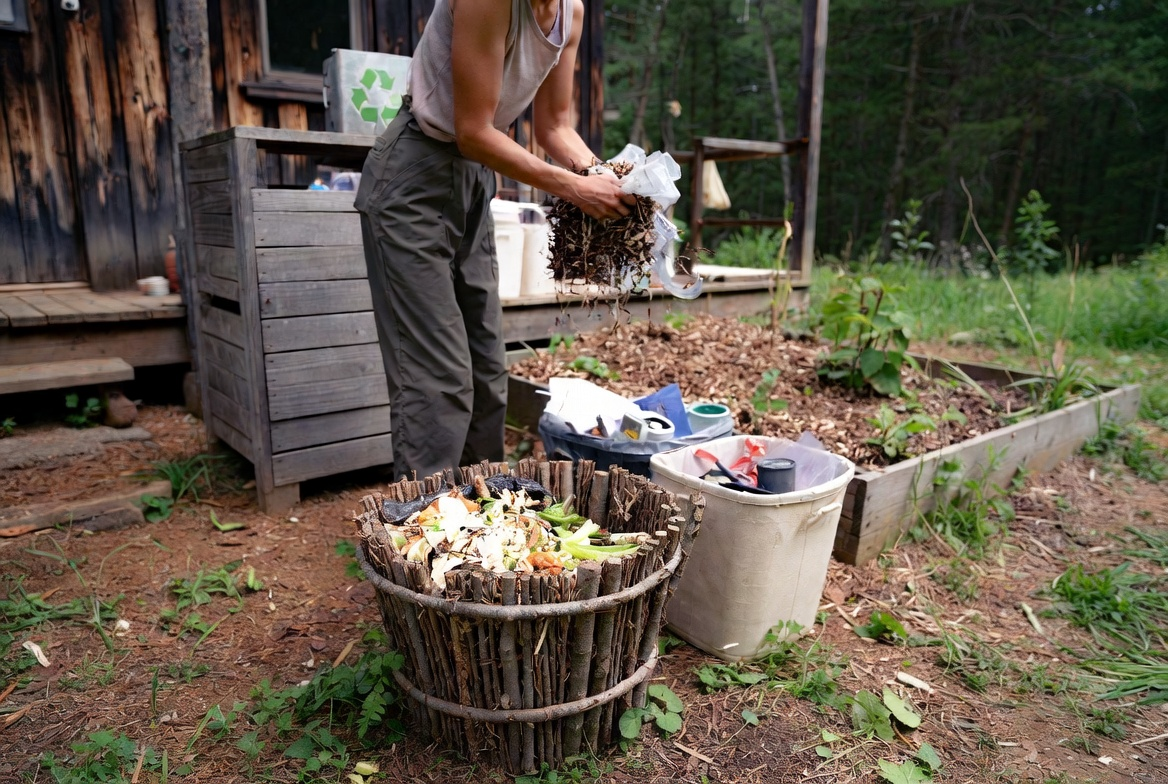
Off Grid Waste Management: Simple Solutions
Imagine finishing dinner and knowing every scrap, every peel, every bit of waste has a second life.
No overflowing trash cans, or weekly pickup truck rumbling down your road.
No guilt about sending anything to a distant landfill.
Just a clean, closed-loop system where your waste becomes compost, biogas, or soil — turning what most people throw away into the fuel that keeps your off-grid life thriving.
That quiet, self-contained efficiency is what off grid waste management delivers every single day.
And in 2026, the tools and methods are simpler, cheaper, and more effective than ever.
This guide gives you the complete beginner-friendly system for managing waste off grid.
You’ll learn how to separate and process every type of waste (human, food, greywater, trash), build or buy composting toilets and systems, create greywater gardens, recycle and repurpose materials, handle burnables safely, scale for families or larger homesteads, and avoid the most common health and odor pitfalls.
By the end, you’ll have a clear, low-maintenance plan that keeps your property clean, your soil fertile, and your conscience clear — all without relying on municipal services.
Why Waste Management Is Non-Negotiable Off Grid
Off grid means no sewer line, no garbage truck, no county dump.
If you don’t handle waste properly, you create health hazards, attract pests, pollute your own water sources, and turn paradise into a problem.
A good waste system closes the nutrient loop: food scraps feed soil, human waste becomes compost (safely), greywater irrigates plants.
In 2026, composting toilets are legal in most rural counties, greywater systems are widely accepted, and small biogas digesters are affordable for cooking fuel.
Done right, waste management becomes one of the most rewarding parts of off-grid living — turning “trash” into treasure while saving thousands on septic and disposal costs.
Step 1: Human Waste — Composting Toilets Done Right
The cornerstone of off-grid waste management.
Modern composting toilets separate liquids and solids, eliminate odor, and turn waste into safe compost in 6–12 months.
Popular options:
- Self-contained units (Nature’s Head, Separett) — easy install, no plumbing.
- Central systems with below-floor chambers — higher capacity for families.
Add peat moss, coconut coir, or sawdust after each use.
Vent with a small solar fan.
Empty solids every 4–8 weeks into a secondary compost bin.
Urine goes to a greywater system or diluted garden fertilizer (1:10 ratio).
Step 2: Food & Kitchen Scraps — Hot & Cold Composting
Hot composting (fast, 3–6 months):
- Build a 3×3×3 ft bin.
- Layer greens (scraps, manure) and browns (leaves, cardboard) 1:2.
- Turn weekly.
- Keep moist like a wrung-out sponge.
Cold composting (slow, 12+ months):
- Simple pile or tumbler.
- Add scraps as you go.
Use finished compost to enrich garden beds.
The Kohree Camping Toilet Portable 5.3-Gal doubles as an odorless composting starter for kitchen scraps when paired with a larger outdoor bin.
Step 3: Greywater — Safe Reuse for Irrigation
Greywater (sink, shower, laundry water) can irrigate fruit trees, berries, and ornamentals.
Never use on root crops or leafy greens that touch soil.
Simple system:
- 3-chamber settling tank.
- Mulch basins or drip lines.
- Use biodegradable soap only.
Filter through sand/charcoal if needed.
In cold climates, route to indoor mulch beds in winter.
Step 4: Trash & Recycling Off Grid
- Burnables (paper, dry cardboard): Small outdoor incinerator or rocket stove.
- Metals/glass: Store and take to recycling when in town.
- Plastics: Minimize, then store for future repurposing or rare dump runs.
- Hazardous waste (batteries, paint): Stockpile and dispose properly on trips.
- Aim for zero trash — repurpose everything possible.
Step 5: Biogas (Bonus for Cooking Fuel)
- Small home digesters turn food scraps and manure into methane for cooking.
- Feed daily, collect gas in bags or tanks.
- Produces fertilizer slurry as byproduct.
- Great for families with livestock.
Common Mistakes Off-Grid Waste Managers Make
- Skipping urine separation — causes odor and slows composting.
- Adding meat/dairy to compost — attracts animals.
- Using non-biodegradable soap in greywater — kills plants.
- Building undersized systems — overflows in wet seasons.
- Not turning or aerating compost — creates anaerobic stink.
Making Waste Management Stick for the Long Term
- Build redundancy: multiple compost bins, extra barrels.
- Check systems weekly.
- Keep a simple log: what went in, what came out.
- Involve family — kids love turning compost.
- Most people achieve near-zero waste within 6–12 months.
Connect This to the Rest of Your Off-Grid Journey
Once waste is managed, food production becomes even more rewarding.
Your compost feeds the garden in Growing Food Off Grid: Gardens & Livestock Basics.
Power your pumps and fans with Off Grid Solar Power Systems: Beginner Guide.
Collect water to support everything with Rainwater Harvesting for Off Grid Living.
And when you’re building around this system, see Building Off Grid Homes: Tiny Houses, Cabins & More.
FREQUENTLY ASKED QUESTIONS:
Is greywater safe for all plants?
No — use on fruit trees, ornamentals, and mulch basins only; never on edible roots or leaves that touch soil.
Can I compost human waste safely?
Yes — separate urine, use plenty of carbon material, and let it age 12+ months to kill pathogens before garden use.
How do I prevent odors in my compost?
Keep it aerobic (turn regularly), add enough browns, and avoid meat/dairy/oils.
What do I do with plastic waste off grid?
Minimize it, store for recycling trips, and repurpose (e.g., bottles as planters or greenhouse covers).
What’s the easiest composting toilet for beginners?
Self-contained units like Nature’s Head or Separett — no plumbing, easy to empty, and odor-free with proper bulking material.
Start managing your waste off grid today with just one simple change — separate your urine or start a compost pile.
The first time you spread your own compost on a new garden bed, you’ll feel that deep off-grid satisfaction.
It’s not about perfection — it’s about closing the loop.
You’ve got this.
Your land is ready to recycle everything you give it.
Ready for the next step? Head over to Real Costs of Living Off Grid: What to Expect and keep building your self-sufficient life.