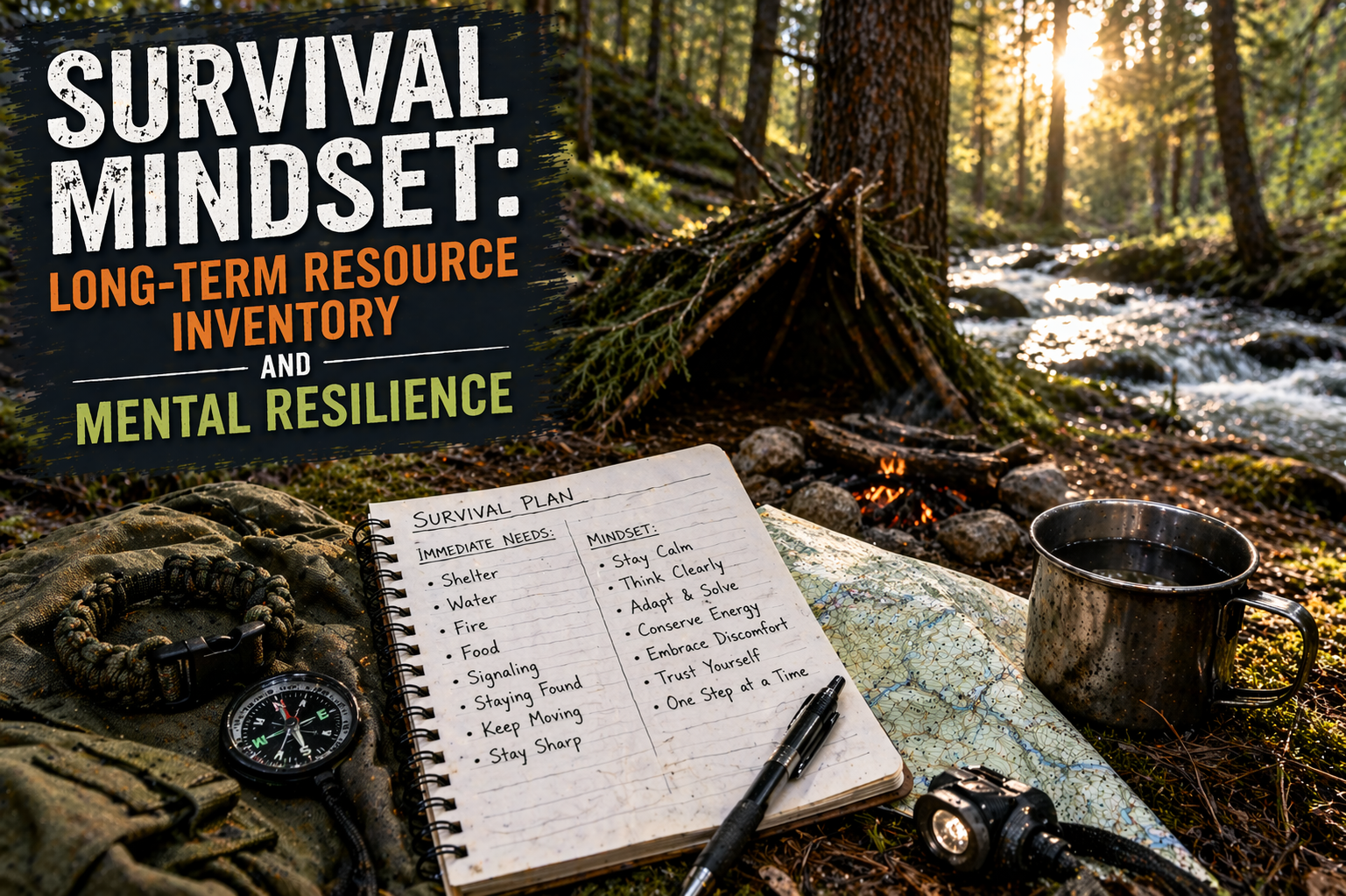
Survival Mindset: Long-Term Resource Inventory and Mental Resilience
Short-term survival gets you through the first night—fire, shelter, a signal. Long-term survival is something else entirely. It’s weeks or months of the same challenges, with no rescue on the horizon, supplies dwindling, hope fading.
What separates those who endure from those who don’t is rarely more gear. It’s the mind that refuses to break and the habit of constantly turning what’s around you into what you need.
A long-term survival mindset keeps you adaptive, calm, and forward-looking when everything feels hopeless. A resource inventory turns ordinary objects, skills, and surroundings into tools that extend your life day after day.
Together, they create a quiet, steady advantage that compounds over time. This guide shows you how to build that mindset and inventory what you already have—so you’re not just surviving the moment, but thriving through whatever comes next.
What Is Long-Term Survival Mindset & Resource Inventory?
Long-term survival mindset is the psychological framework that sustains hope, focus, and problem-solving during prolonged hardship. Resource inventory is the ongoing process of cataloging and repurposing everything available—physical items, knowledge, people, and environmental features—to meet daily needs.
Core mindset traits:
- Acceptance: “This is my situation. Now what can I do?”
- Small wins: Break tasks into tiny, achievable steps and celebrate each one.
- Adaptability: Change plans when conditions shift without emotional collapse.
- Positive self-talk: Replace despair with “I’ve handled every day so far.”
- Routine: Create daily structure to fight boredom and helplessness.
Resource inventory categories:
- Gear & supplies
- Skills & knowledge
- Natural materials
- People & their abilities
- Environmental factors (weather, terrain, resources)
This combination turns scarcity into opportunity and keeps you mentally and physically capable over weeks or months.
Why Mindset & Inventory Outweigh Gear in Long-Term Survival
Gear eventually runs out or breaks. Skills can be forgotten under stress. Mindset and constant inventory are renewable.
A strong mindset conserves energy, prevents panic decisions, and finds solutions where others see only problems. Resource inventory turns a jacket into cordage, a bottle into a water collector, boredom into a daily routine.
Real example: Survivors of extended wilderness ordeals (lost hunters, plane crash victims) almost always credit mindset and improvisation first. Those with better initial gear but poor mental resilience often deteriorated faster.
Building a Long-Term Survival Mindset
- Practice acceptance — Say out loud: “This is happening. Now what can I do?” This stops denial and starts action.
- Focus on small wins — “I gathered one armload of wood,” “I boiled one cup of water.” Each success builds momentum.
- Use positive self-talk — Replace “I’m going to die” with “I’ve survived every bad day so far.”
- Create routine — Morning inventory, midday task, evening reflection. Structure fights despair.
- Anchor hope — Keep a photo, note, or memory of loved ones as a reason to keep going.
Practice daily: When something goes wrong in normal life (late bill, argument), pause, accept, and solve one small step.
Conducting a Resource Inventory
- Physical inventory — List everything on you and around you: knife, cordage, clothing, backpack contents, nearby rocks/branches/plants.
- Knowledge inventory — What do you know? First aid, knots, plants, fire starting, navigation.
- Environmental inventory — Weather forecast, terrain features, water sources, potential shelter sites.
- Human inventory — Who is with you? What skills do they have? How can you support each other?
- Re-inventory regularly — Conditions change. Reassess every few hours or when something new appears.
Improvising Tools from Inventory

- Cordage: Shoelaces, clothing hems, plant fibers.
- Shelter: Tarp from clothing, debris hut from branches.
- Water container: Plastic bottle, hollow log, plastic bag.
- Fire: Ferro rod, battery + steel wool, bow drill from wood.
- Food: Traps from cordage, fishing line from thread.
Mindset says: “I don’t have X—I have Y, so how can Y become X?”
Maintaining Morale Over Weeks or Months
- Celebrate tiny victories (first fire, first sip of clean water).
- Create daily routine (morning check, evening review).
- Talk out loud — verbalize plans to stay focused.
- Limit negative rumination — redirect to “What can I do right now?”
Real-Life Examples
Last year, a hunter lost for 9 days in northern British Columbia used mindset to stay calm and inventory resources daily. He turned a torn jacket into cordage, built a debris hut, and maintained hope with a photo of his family. Rescuers found him alive and coherent. Those who lost hope deteriorated quickly.
Mindset and inventory turned weeks into survivable days.
How to Practice Long-Term Mindset & Inventory Now
- On hikes: Pause every hour to inventory gear, environment, and mental state.
- At home: Do weekly “bug-out bag” inventory drills.
- Practice self-talk: When stressed, say “What can I do right now?” out loud.
- Simulate: Spend a day with limited resources and practice improvisation.
The more you practice, the stronger your mindset becomes.
Conclusion
Long-term survival isn’t about having more gear—it’s about having the right mindset and knowing how to use what you already have.
Accept the situation, prioritize needs, inventory resources constantly, and maintain hope through small wins and routine.
These survival skills essentials turn uncertainty into manageable steps.
Stay resourceful. Stay hopeful. You’ve got this.